
Egypt exported 172,000 tonnes of food products and imported 218,000 tonnes between 22 and 28 August 2026, highlighting the scale of its food trade and the National Food Safety Authority's role in monitoring compliance and facilitating flows.
Egypt's food trade activity remained robust in late August 2026, with the country exporting approximately 172,000 tonnes of food products and importing around 218,000 tonnes over a single week, according to the National Food Safety Authority (NFSA). The figures reflect the ongoing importance of food trade for Egypt's economy and underline the NFSA's expanding oversight role.
Between 22 and 28 August, Egyptian exporters dispatched 3,516 consignments supplied by roughly 1,300 companies, covering nearly 700 varieties of food products. On the import side, 1,546 consignments were received by 766 importing companies, demonstrating the scale and diversity of Egypt's food supply chain.
Export destinations and product breakdown
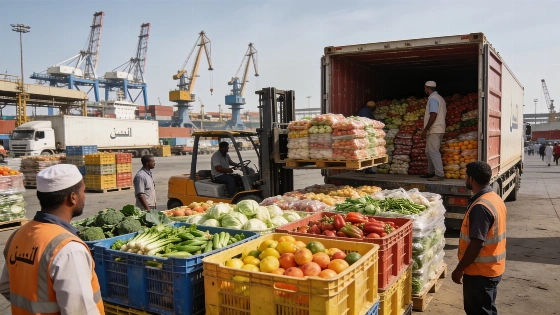
Vegetables and tubers accounted for about 36,000 tonnes of exports, with sweet potatoes, onions, and potatoes leading the category. Fruit exports reached 25,000 tonnes, led by strawberries, mangoes, and citrus fruits. Other exported products included flour, grain products, and preserved preparations.
Sudan was the top destination for Egyptian food exports during the week, followed by Côte d'Ivoire, Somalia, Saudi Arabia, and Tunisia. In total, Egyptian food products reached 156 countries. Safaga Port handled the highest number of export consignments, followed by Alexandria and Damietta ports.
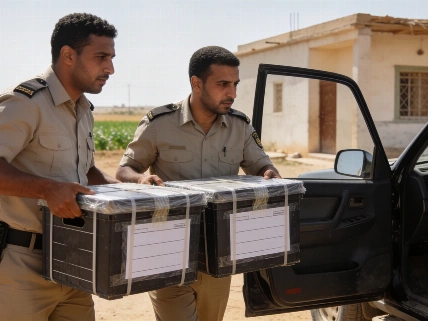
The NFSA issued 1,300 health certificates for export shipments and 908 export permits for agricultural products, supporting 797 exporting companies. Additionally, 28 export permits for natural casings of animal origin were granted for shipments to the European Union, following compliance testing. Four rejected consignments were re-exported to maintain trade standards.
Food imports and regulatory oversight
Egypt's food imports during the week included wheat, edible oils, broad beans, and soybeans, sourced from 80 countries. Russia was the largest supplier, followed by Indonesia, Australia, the United States, and Italy. Alexandria Port was the main entry point for imports, with Cairo International Airport and Damietta Port also handling significant volumes.
The NFSA cleared 883 consignments under temporary release and 390 through a rapid-release system. Status reports were prepared for 79 consignments as part of regulatory procedures, and 65 import licences were issued. The authority placed 117 incoming consignments under precautionary hold and maintained holds on 17 consignments that failed laboratory tests, pending further regulatory action.
Implications for Egypt's food trade and regulatory environment
The latest data highlights the scale and complexity of Egypt's food trade, as well as the NFSA's central role in ensuring compliance with food safety standards. The authority's actions-ranging from certification and permitting to precautionary holds-are designed to facilitate trade flows while protecting public health and maintaining Egypt's access to international markets. Ongoing monitoring and regulatory interventions are likely to remain critical as Egypt continues to balance food security, trade expansion, and compliance with international standards.