

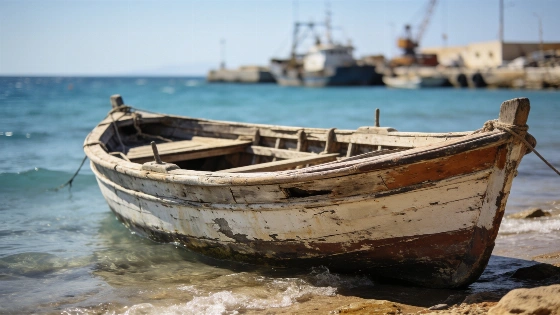
Almost 20,000 people attempted the Libya-Crete crossing in 2026. The route's growth is tied to smuggling networks and eastern Libya's power structures, while European cooperation with local actors can strengthen their influence.
Greek authorities recorded 710 people arriving in 14 boats on October 20, 2026, followed by hundreds more the next day. Those arrivals show the scale of a route that has become an important channel for irregular migration into Europe.
Almost 20,000 people have attempted the crossing from Libya to Crete in 2026, according to the original account. UNHCR figures reported by the German Press Agency put the number registered on Crete and neighboring Gavdos at nearly 21,000 by October 25, already above the 20,187 arrivals recorded on the two islands during all of 2025. Many boats leave from eastern Libya near Tobruk and Derna, and the crossing takes roughly a day and a half. Greek authorities reported 58 people found on Gavdos after a crossing from Libya on October 28, as nationwide arrivals passed 35,000 for the year.
The route remained active into November. On November 1, Greek authorities reported that 264 people had reached Crete overnight, bringing the reported 2026 total for Crete and Gavdos to about 21,000. Crete and Gavdos accounted for more than half of Greece's sea arrivals during the year, according to figures reported by Greek media. Smuggling networks supply the small boats used on the route. Journeys from eastern Libya take around 36 hours.
Smuggling adapts to local power
The route grew after eastern Libyan armed forces acted against people-smuggling activity directed towards Italy in 2023. Networks shifted to smaller boats sailing for Crete. Reporting by Deutsche Welle, citing the Global Initiative Against Transnational Organized Crime, describes established networks that had moved goods and vehicles, as well as drugs, before entering the migrant-smuggling business. Boats have been built locally around Tobruk. Before departure, migrants have waited in houses near the coast.
Researchers at Chatham House describe Libya's conflict economy as a system in which armed actors gain resources and political influence by controlling informal markets and transport routes. They say measures against smuggling can also help local power brokers seek financial or political support. Hager Ali of the German Institute for Global and Area Studies, or GIGA, told DW that existing contacts, along with transport and security arrangements, can be used for illegal activity.
Libya has been divided between rival leaderships since 2014. The United Nations-backed administration is based in Tripoli, while the eastern leadership is based in Tobruk and backed by Khalifa Haftar. His sons hold important positions, but the original account reports no proven links between the Haftars' networks and people smugglers on the eastern coast. Ali said the appearance of control over the market can itself increase political influence.
The east-west division also shapes external contacts. A separate Tripoli track with Ethiopia has put citizen protection and regional security on the agenda, as covered in Tripoli's Ethiopia talks.
Migration and Mediterranean diplomacy
In late October, the Tobruk government signed a maritime agreement with Turkey. Turkey had previously concluded a deal with the Tripoli government and fought militias sponsored by Haftar during Libya's civil war. Greece rejects the new agreement, saying it infringes on Greek economic rights around islands including Crete and Rhodes. The original account says the agreement's direct link to rising arrivals in Crete is unclear. Ali said migrants could conceivably be used as leverage in geopolitical disputes.
Greece also adopted a temporary emergency measure in July 2025 in response to increased maritime arrivals from North Africa. Parliament approved it on July 11 by 177 votes to 74. The measure suspended the examination and registration of asylum applications by people arriving by sea from North Africa for three months. It also allowed returns before ordinary asylum procedures were completed.
The European Union has worked with Libyan actors to prevent irregular migration to Europe, despite their links to armed groups and disputed political legitimacy. Retired Giessen University professor Andreas Dittmann told DW that this cooperation can curb migration while adding to the local power of those able to influence the timing and scale of departures.
An International Organization for Migration report based on data from May and June 2026 registered around 950,000 migrants and refugees living in Libya. Many had limited access to healthcare and lacked the permits needed to live or work, increasing their reliance on informal markets and their exposure to exploitation.







