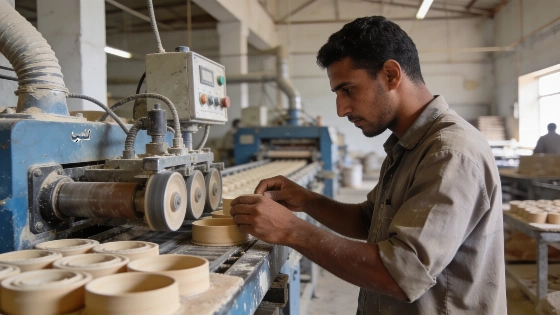
Libya's Ministry of Industry and Minerals plans to assess factory needs through a unified platform and national database, with targeted support intended to raise capacity and improve the quality of locally made goods.
Libya's Ministry of Industry and Minerals said on 16 November 2026 that it was preparing a national initiative to support factories and industrial facilities through the Credit Guarantee and Operational Purposes Fund. The initiative is intended to review applications from industrial companies so the Fund can identify operational needs and help raise the production capacity of national factories, the Libyan News Agency reported, citing General Undersecretary Mustafa al-Sammu.
The Credit Guarantee and Operational Purposes Fund is expected to assess manufacturers' operational needs and identify technical barriers before directing support. The Ministry of Industry and Minerals says the review will examine applications from industrial companies and facilities.
The initiative is still being developed. The Fund's specialised departments are expected to set the operating rules and technical criteria, then establish the procedures applicants must follow before the programme becomes operational.
A registration system would map factory needs
A unified electronic platform is planned for industrial plants and facilities to submit information and register their operations. Its records would feed a national industrial database, showing what manufacturers produce and what support they need. The database is also expected to record existing and targeted production capacity, as well as operational and development requirements.
Authorities expect the database to help set industrial priorities and direct assistance according to technical standards and identified needs. The ministry says the initiative is part of wider efforts to strengthen Libya's productive economy. A separate Libya report covered an eastern migrant operation.
The ministry says it aims to raise local output and improve the quality of Libyan products to approved standards. It also wants to increase their availability at competitive prices. Officials envisage exports once domestic demand has been met, subject to applicable laws and regulations.
Domestic supply is the stated priority
The programme is intended to increase domestic output and make Libyan goods more competitive, with quality measured against approved standards. It also aims to ensure locally produced goods are consistently available at competitive prices, reducing reliance on imports.
Manufacturing accounted for 2.8% of Libya's GDP in 2017, according to World Bank-derived figures cited by The Meridian 50. A broader industry measure that includes construction stood at 73.2% of GDP in 2025; the figures cover different years and sectors. The data offers a snapshot of the distinction between manufacturing and the wider industry category.
Libya also has established heavy-industry operations. The Libyan Iron and Steel Company (LISCO), based in Misrata, produced 108,000 tonnes of direct-reduced iron in October 2026 from units one and two. That was its highest monthly output since the start of that year, Libya Herald reported on 18 November. The report did not announce a financing decision for LISCO under the proposed initiative.
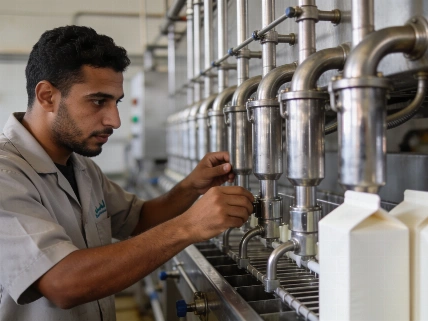
Food-sector reporting has also highlighted operational needs tied to domestic production, including dependable electricity and access to equipment and spare parts. It has also pointed to financing and workable import arrangements. A November 2026 analysis put Libya's forecast cereal requirements at 3.3 million tonnes and food inflation near 18%. It identified processing, packaging, storage and transport as areas for investment.
Exporting is presented as a possibility once local demand has been adequately met. Any exports would remain subject to applicable laws and regulations.