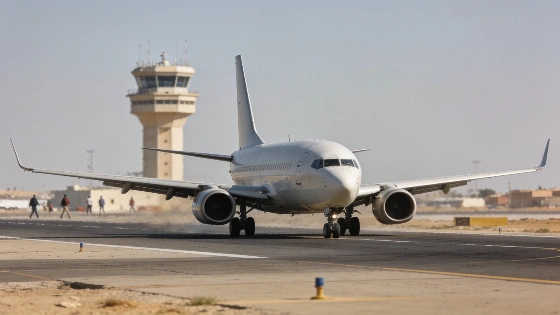
Former Libyan Airlines chief Mohamed Issa estimates overflights could bring Libya US$70-80 million annually, if the country improves aviation safety and management to restore confidence among international carriers.
Mohamed Issa said lifting International Civil Aviation Organisation (ICAO) safety warnings on Libyan airspace should not be confused with the separate EU flight embargo affecting Libyan airlines, which remains in place. He put potential annual overflight-fee revenue at about US$70-80 million.
ICAO Secretary General Juan Carlos Salazar announced the removal of the longstanding warnings on 23 October 2026 during a meeting of Middle Eastern civil-aviation officials in Doha. The warnings dated from 2013 and 2015, during Libya's civil conflict. Libya's Airports Authority welcomed the decision and said it would keep working with international bodies to lift remaining restrictions on Libyan carriers, as the authority said.
Issa, a former General Manager of Libyan Airlines, presented a paper titled "Maximising the Economic Return of Libya's Airspace" at the Libya International Aviation Forum and Exhibition in Tripoli on 3-4 November.
Safety and confidence are central
Issa argued that Libya needs investment in aviation infrastructure and workforce development to benefit from its strategic location between Europe and Africa. He called for stronger safety protocols and more effective aviation management to rebuild the country's aviation system.
Trust among the international aviation community, he said, is key to attracting overflights. Libya's Transport Ministry reported strong airline interest following the ICAO decision: authorisations for the 2026-27 winter season were projected to reach 61,968 transit flights a month from November, compared with about 2,000 monthly transit flights during the previous winter season, according to AeroTrail's regulatory report.
The ICAO action did not lift separate national and regional safety measures. The European Union Aviation Safety Agency's Libya conflict-zone bulletin, renewed in July 2026 through 31 January 2027, advised operators against using Libyan airspace below about 32,000 feet, except for sea approaches to coastal airports. A US Federal Aviation Administration prohibition on certain flights in Libyan territory and airspace was extended until 20 March 2028. A Boeing training report also covered plans to prepare Libyan staff for the proposed Libyan United Airlines.
Fee levels require a strategic balance
Issa said Libya should review how it charges for overflights, weighing a flat fee against rates based on factors such as distance or aircraft weight. He cautioned that higher charges could deter carriers, while lower fees might attract more traffic. He proposed a sustainable system that offers carriers realistic value for money.
Asked by Libya Herald during the forum's question-and-answer session to estimate potential revenue, Issa put it at about US$70-80 million per annum.