

Libya's rival administrations agreed on a two-year window for national elections, yet their competing power bases remain intact. The article argues the arrangement could shift conflict into state institutions.
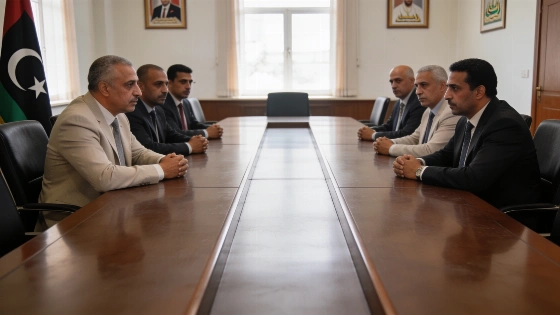
The August 30, 2026, accord assigns the United Nations a mediating role in talks between the administrations based in Tripoli and Benghazi. Reached through the UN-facilitated Smaller Convening, it provides for presidential and parliamentary elections within 24 months and calls for dialogue on reconciliation, security and economic matters. The UN Security Council welcomed the agreement on October 30, reaffirming its role in facilitating an "inclusive, Libyan-led and Libyan-owned political process," as outlined in its resolution coverage.
UN-sponsored talks began in April 2026 to address the political deadlock. The August agreement also provides for reconstituting the board of Libya's High National Elections Commission, which administers national elections. The 24-month timetable is a political target, not an operational election schedule: an agreed constitutional and legal framework, electoral rules and unified executive authority remain necessary.
The agreement seeks to bring former rivals into a shared political framework. It does not merge their administrations or settle their underlying contest for authority, leaving unresolved how a unified state would function during the transition.
Competing power bases remain
Prime Minister Abdul Hamid Dbeibah leads the Tripoli government, which is internationally recognised and has broader popular support, according to the source material. Khalifa Haftar leads the Benghazi-based administration and commands the Libyan National Army, which controls more territory. Both governments rely on armed groups.
Serious fighting between the sides has been limited since 2020, though skirmishes continue. The Security Council's roadmap calls for a unified executive authority capable of exercising power throughout the country, alongside the reunification of military, security, judicial and other state institutions. It urged Libyan parties to support a unified government; the resolution itself did not resolve disputes over leadership, electoral legislation or institutional control.
The article's central concern is that political unification without resolving the rivalry could move the struggle from the battlefield into parliament and other state institutions.
Karim Mezran of the Atlantic Council warned: "The deal's many structural contradictions will surface soon enough and when they do, they risk bringing the whole edifice down in violence." The agreement's reliance on UN-facilitated dialogue does not itself resolve those contradictions. In its statement to the Security Council, the UK said Resolution 2835 "provides a clear basis for UNSMIL to support Libyan parties to establish a single executive authority" and urged Libyan actors not to undermine that work, according to the UK government statement.
Haftar's external backing
The article argues that several foreign actors appear willing to accept a political outcome favouring Haftar. Ballard Partners, a lobbying group with ties to the Trump administration, agreed to represent him in public relations. Reports also described Haftar as instrumental in the release of U.S. missionary Kevin Rideout, who was captured by the Islamic State in 2025; Rideout thanked him in a video after his release.
Haftar's family helped secure the release of two Russian mercenaries captured in 2024, while reports say Haftar is working with China on crude-oil trading in exchange for greater military support. Beijing has also been reported to have supplied combat drones despite UN sanctions. The source article says the United Arab Emirates has worked with Haftar in support of Sudan's rebel paramilitary.
It further reports that Pakistan and Saudi Arabia are supporting Haftar financially and militarily, and that Turkey and Egypt have also moved toward cooperation with him. The article says Haftar has received aircraft and is building airstrips, which it argues could give him an advantage if fighting resumes. These claims describe reported relationships and plans; they do not establish the eventual outcome of Libya's political process.
The United Nations' role in Libya is part of its wider regional diplomacy; earlier UN coverage reported on Russia's opposition to a US-drafted Western Sahara resolution and the renewal of UNSMIL's mandate.
The article's prophecy argument
The source advances a separate forecast based on Bible prophecy. It cites a January 27, 2011, television programme in which Trumpet editor in chief Gerald Flurry urged viewers to watch Libya, then argues that Daniel 11 predicts Libya will align with Iran as part of what it calls "the king of the south." This is the publication's religious interpretation, not an established political development.
The article says verses 42-43 place Libya within that alliance and interprets their reference to Egypt as a sign that Cairo will help bring Libya into Iran's camp. It presents this as a future prediction regardless of whether Dbeibah, Haftar or another ruler holds power.







