
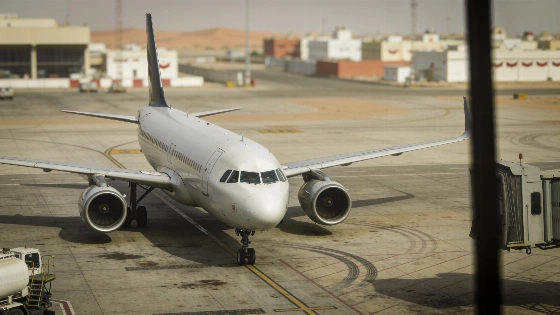
Royal Air Maroc now has 70 aircraft. A government-backed plan sets a target of 200 by 2037, as Morocco also works to raise airport capacity to 80 million passengers a year by 2030.
A Boeing 737 MAX 8, registered as CN-RHS, brought Royal Air Maroc (RAM) to 70 aircraft. The airline identified it as its 70th plane. The larger target is 200 aircraft by 2037, under a government programme running from 2023 to 2037.
RAM's fleet was estimated at about 50 aircraft in 2021, a roughly 40% increase in five years. Reports also point to a 71st aircraft joining the fleet. Nearer-term targets call for 74 aircraft by the end of 2026 and 88 in 2027.
The government-backed programme also envisages RAM carrying about 31.6 million passengers a year. The new aircraft is not part of a completed fleet-renewal order. In April 2024, RAM launched a tender for up to 200 aircraft from Boeing, Airbus, Embraer and ATR. Major deliveries are expected from 2028, according to reporting on the plan. Leasing is expected to help add capacity before then.
The 200-aircraft figure is a long-term goal. It does not mean all the planes have been ordered or will arrive at once. Leasing can help cover the gap before major deliveries, while the targets for 2026 and 2027 offer nearer-term measures of progress.
Morocco welcomed 19.8 million tourists in 2025, up 14% from the previous year, according to the Ministry of Tourism, Handicrafts and Social and Solidarity Economy. The country's target is 26 million visitors by 2030. That year, Morocco will co-host the FIFA World Cup with Spain and Portugal. Tourism directly accounted for 7.3% of GDP in 2024, according to the OECD's 2026 country review.
More visitors mean more demand for seats, connections and airport services. Aviation capacity is an economic issue, too.
Morocco plans to lift national airport capacity from about 30 million to 80 million passengers a year by 2030 through its Airports 2030 strategy. In 2026, the African Development Bank agreed to provide €270 million for airport expansion and modernisation under the PEMIA programme. The programme is valued at about MAD 9.08 billion, and the financing covers roughly 31% of its cost. The AfDB financing programme is part of a broader effort to prepare infrastructure for higher traffic. Morocco's airport investment also features in these airport expansion plans.
Mohammed V International Airport sits at the centre of Morocco's plan to make Casablanca a link between Africa, Europe and other international markets. A larger RAM fleet could support more flights and destinations. That could give passengers more chances to connect through Morocco, rather than starting or ending their journeys there.
The Ministry of Tourism's visitor targets and the government's airport plans depend on investment beyond the airline. More aircraft alone will not make Casablanca a hub.
Route choices, flight frequency, aircraft allocation, fares and schedules will shape whether fleet growth gives passengers practical options across Africa and beyond. Airport throughput and terminal capacity will matter, too. So will connections to onward transport.
Reaching 70 aircraft shows progress. It does not prove Casablanca has become a global hub. Morocco's plan links airline growth with airport capacity and tourism demand. Whether it works will depend on delivering those investments in step. The 200-aircraft target sets the scale of the ambition. For travellers, reliable connections and the ability to handle more passengers will matter most.