After the 2026 election, King Mohammed VI asked Fatima Ezzahra El Mansouri to form Morocco's next government, the first time a woman has received that mission. Coalition talks and low turnout have sharpened the test: turning political promises into jobs and better services, and rebuilding public trust.
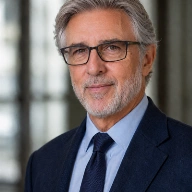
On 29 September, King Mohammed VI tasked Fatima Ezzahra El Mansouri with forming a government. It was the first time a woman in Morocco had received that mission. El Mansouri began talks with political parties the next day.
Her party, the Authenticity and Modernity Party (PAM), fell short of a parliamentary majority. Preliminary results from the 23 September vote gave PAM 97 of the 395 seats, according to the Interior Ministry's results. Reports citing party sources said talks included the National Rally of Independents (RNI) and Istiqlal. That could keep the previous governing alliance in place, but coalition talks will show whether it can win enough support.
Turnout adds to the challenge. Morocco's royal portal lists 15.8 million registered voters and reports turnout of 38.02%, with nearly six million people voting. In a separate preliminary-results announcement, Interior Minister Abdelouafi Laftit gave a turnout figure of 38.08%. He compared it with 50.86% in 2021 and 42.27% in 2016. The 2026 figures differ slightly because they appear in separate official communications. Both point to lower participation than in the two previous elections. The official record is available through Maroc.ma's election portal.
Abdelhafid Younsi, a constitutional law and political science professor at Hassan I University in Settat, pointed to turnout of roughly 38%. He also criticized practices by some PAM members that he said harmed the electoral process. Younsi argued that the government must earn legitimacy through results that affect citizens. Those claims are allegations, not findings established by the preliminary vote count.
Article 47 of Morocco's Constitution requires the king to appoint the head of government from the party that finishes first in the House of Representatives. The cabinet must then win parliamentary investiture, which requires an absolute majority. The German Konrad Adenauer Foundation has assessed that a government is expected to form by the end of October. The numbers make coalition-building an immediate test. So is agreement on a workable programme.
Younsi named purchasing power, healthcare and education as urgent social priorities. He said the quality of public services matters as much as their funding. That includes whether people are treated with dignity when they use them. He also called for safeguards against using public office to build personal wealth or create conflicts of interest.
Rachid Lazraq, head of the North Africa Centre for Studies, Research and Public Policy Evaluation, said investment and growth must lead to jobs and better living standards. Public investment alone, he argued, will not solve unemployment or low participation in the labour market, particularly among young people and women. Major projects and infrastructure tied to the 2030 horizon will also bring financing needs. The government must manage those needs while maintaining fiscal balances.
The agenda also includes completing social protection reform, improving the business climate and raising productivity. Water stress and climate change are adding pressure through their effects on agriculture, food security and prices. The Morocco-Mauritania road corridor plan is one example of an investment priority that must compete for public attention and resources. Projects like this put domestic choices in a wider Maghreb context. Practical transport links sit alongside longstanding diplomatic differences.
Lazraq said the gap between economic indicators and families' living standards will be a central social test. He named unemployment, the cost of living and access to housing. He also pointed to uneven access to quality healthcare and education, along with disparities between urban and rural areas and between regions. Social spending, he said, should be judged by its effects on household incomes, schools and hospitals, and young people's access to stable work.
Rachid Lamsalem also pointed to healthcare reform, a shortage of medical staff and weak services. He raised rising unemployment among graduates and people who have lost their jobs. The incoming government, he said, will need qualified ministers who can shape policies that respond to citizens' needs.
For Nabil Al-Andaloussi, head of the Maghreb Centre for Strategic Research and Studies, the political test is to build a coherent majority that can make decisions and take responsibility for them. Coalition parties will need to coordinate. Measurable targets for employment, investment, public services and social protection will matter more than simply putting together a parliamentary majority.
Al-Andaloussi also called for stronger advanced regionalisation, clearer accountability and a lasting response to conflicts of interest. On foreign policy, he said Morocco will need to defend its position on Western Sahara and manage relations with the European Union, the United States, Spain and France. It will also have to navigate changes in the Sahel, Mediterranean and North Africa while keeping its decision-making independent. These priorities will compete for diplomatic attention with the government's immediate domestic obligations.
The first test is forming a cabinet that can win parliamentary support and agree on priorities. After that, political credibility will depend on visible gains in employment, household purchasing power and public services. Without progress on those measures, the government will struggle to restore the confidence that analysts say the election left weakened.