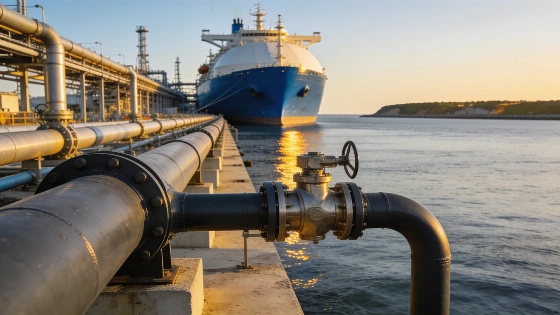
Enagás chief Arturo Gonzalo said gas sent through the reversed Maghreb-Europe pipeline comes from Moroccan-owned ships and other suppliers, as Spain addresses Algeria's warning against resale.
After Algeria shut the Maghreb-Europe pipeline in November 2021, Spain began running it in reverse to supply Morocco. The GME had long been part of Spain's gas transmission system: Enagás's 2016 operations plan listed the facility as "Gasoducto.Sealines GME."
At an event organized by Nueva Economía Forum, Enagás chief executive Arturo Gonzalo said the gas entering the Spanish network for this route arrives on Moroccan-owned ships and comes from other suppliers. He said commercial tracking systems verify its origin and that deliveries contain no Algerian molecules.
Enagás recorded 126,264 GWh of imports through Spain's North African interconnections in 2019, before the GME transit arrangement ended. The figure shows the scale of the region's role in Spain's gas system; the company's 2019 system report identifies those connections as a major supply route.
Algeria's warning over resale
The distinction matters because Algeria's Medgaz pipeline is another active link with Spain. In April 2022, Algeria's Ministry of Energy warned Madrid that reselling Algerian gas to Morocco would breach contractual obligations. Sonatrach said it could terminate contracts with Spanish customers if final-destination clauses were violated.
The issue concerns imported supply, separate from Morocco's exploration activity described in an earlier report on reconnaissance rights in the Missour basin.
Enagás describes a compliance approach
Gonzalo said Enagás acts in the interests of Spain's gas network and follows the rules governing cooperation with neighbouring countries. He called Algeria a key, reliable supplier that had consistently met its obligations, and said Enagás's approach complies with those rules. The company's 2016 operations plan included the GME among the infrastructure managed within Spain's gas system.