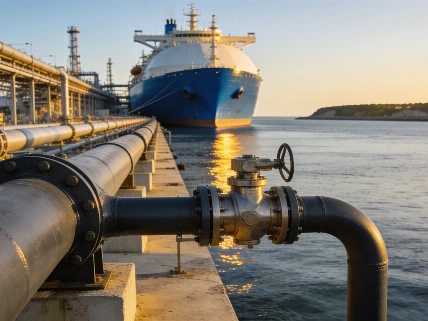
At the Food from Ukraine Summit Zelenskyy said war-related disruption to Black Sea exports threatens supplies for hundreds of millions. UN officials and India also urged protection of maritime routes.
Drone attacks in the Black Sea continue to threaten civilian navigation, UN Under-Secretary-General Rosemary DiCarlo told the Security Council on 23 November. She said the disruption was affecting grain exports and other food supplies intended for countries in need. Attacks on Ukraine's energy system were also worsening humanitarian conditions ahead of winter.
At the Food from Ukraine Summit, President Volodymyr Zelenskyy said Russia's war had made agricultural exports from the Black Sea region much more difficult. He warned that the effects reach people in countries including Algeria, India, Sudan and Indonesia.
Export routes and farm production
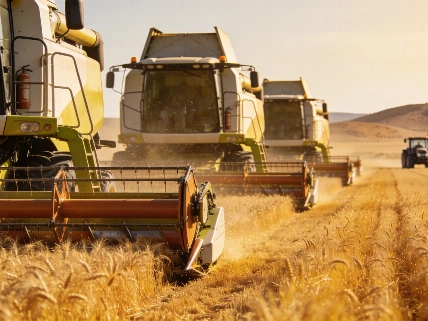
Ukraine supplies international markets with grain products, including flour, alongside sunflower oil and other agricultural goods. Zelenskyy said shortages and higher prices follow when those supplies are disrupted.
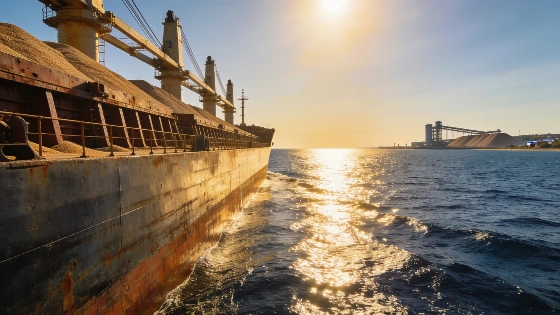
UN figures presented to the Security Council showed that, by mid-October 2026, 63% fewer wheat and maize vessels were moving through the Bosphorus than at the same point in 2025. The briefing estimated that about 10 million tonnes of Russian and Ukrainian wheat might not reach global markets during 2026, a volume the UN said could feed around 44 million people. These figures reflect falling vessel movements and projected exports, not the disappearance of grain production.
More than 300 attacks on the Black Sea maritime route had been recorded in 2026, with at least 40 people killed, DiCarlo told the Council. UN coverage also reported that ships flying the flags of Greece, Liberia and Somalia were struck in mid-November. Two sank, including one carrying wheat.
He said Ukraine was working with European neighbours to keep the Solidarity Lanes functioning and move agricultural products through Europe. The country was also coordinating with Arab partners and Türkiye. Export revenue, he added, gives farmers and agricultural producers resources to plant the following year's crops.
Alternative routes have carried substantial volumes since the Black Sea Grain Initiative was terminated. The UN Security Council briefing said almost 60 million tonnes of Ukrainian grain and agri-food products had transited Romania toward global markets since the start of Russia's aggression, while noting that alternative routes cannot fully make up for disruptions to Black Sea shipping. Before the full-scale invasion, Ukrainian food exports helped feed about 400 million people annually, according to the World Food Programme.
The earlier Black Sea Grain Initiative, signed in Istanbul on 22 July 2022 by Ukraine, Russia, Türkiye and the United Nations, enabled commercial food exports from Odesa, Chornomorsk and Yuzhny. UN Secretary-General António Guterres described the agreement as a hopeful signal for global food markets. The arrangement is a past precedent for maintaining maritime access, not the current export mechanism.
Food aid and international response
Ukraine launched its Food from Ukraine programme during the first year of the full-scale war. Zelenskyy said it had delivered hundreds of thousands of tonnes of food to Yemen, Ethiopia and Sudan, and that Ukraine had also helped the Syrian people.
At the Security Council session on protecting energy infrastructure and Black Sea lifelines, India's Permanent Representative P Harish called for humanitarian access and protection of civilian infrastructure. He also urged freedom of navigation. He said the Black Sea region and India together account for almost a fifth of global cereal production. Referring to the 1943 Bengal famine, which claimed millions of lives, Harish warned that disruptions to agricultural production, maritime connectivity and trade can have consequences well beyond the regions directly affected.
World Food Programme representative Luke J. Lindberg described pressure on three maritime bottlenecks, the Strait of Hormuz, Bab el-Mandeb and the Black Sea, as a constraint on food exports and agricultural inputs. He said grain remained in silos in Ukraine and Poland while families in Somalia, Sudan and South Sudan faced catastrophic hunger. The WFP said it stood ready to facilitate humanitarian grain shipments from both Russia and Ukraine and support efforts toward a shared understanding among the parties.
Zelenskyy called for broader cooperation, including sharing Ukraine's food-production experience with countries facing difficulties developing their agricultural sectors. Regional coordination has also featured in Arab League discussions on separate regional crises.