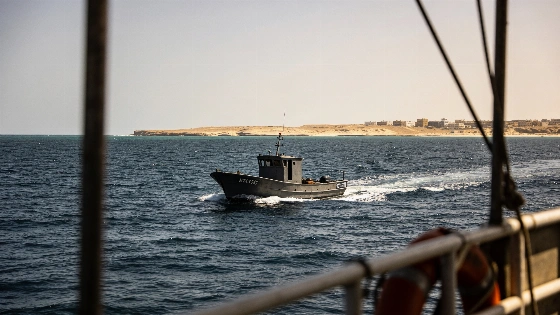
Trump urged Libya to stop serving as a migration gateway to Europe and the United States, while backing institutional unity and elections. His remarks come amid disputes over Tripoli's maritime accord with Turkey.
Libya's rival administrations have left the country without a stable basic government since Muammar Gaddafi fell in 2011. Against that backdrop, President Donald Trump called on Libyans to unite and reclaim sovereignty.
Greek City Times reported that Trump praised Libya's counterterrorism partnership with the United States and joint efforts that defeated ISIS in the region. He also recognized Libyan forces' sacrifices in the fight against radical Islamist terrorism.
Unity and elections remain stated priorities
Trump voiced American support for unifying Libya's fragmented institutions and establishing a credible path to national elections. He said Libyans had endured years of terrorism and foreign interference. On 26 October 2026, United Nations Secretary-General António Guterres likewise urged Libya to "build on political momentum, unify institutions and pave the way for national elections, finally bringing the prolonged transition to an end," speaking in Egypt.
The appeal comes amid broader debate over the country's political deadlock, including Libya's election timetable. Turkey and Russia are among the external powers pursuing competing interests on Libyan soil; regional actors are involved too.
Turkey maritime agreement remains disputed
The remarks come as disputes continue over the maritime boundary agreement between Turkey and the Tripoli-based administration. The accord purports to establish an exclusive economic zone in the Mediterranean.
Information from the account, Greece has rejected the agreement. Egypt and Cyprus have also rejected it, alongside other Mediterranean states. During debate surrounding the European Council meeting of 15-16 October 2026, European Parliament speakers called the memorandum contrary to the UN Convention on the Law of the Sea and challenged its effect on the sovereign rights of Greece and Cyprus. In a separate intervention, MEP Loucas Louca protested the Turkish-Libyan memorandum on the limitation of maritime zones. The parliamentary debate recorded opposition to the deal; it did not produce a new court judgment on the maritime boundary. The European Parliamentary Research Service reported that EU leaders also discussed migration at the meeting, including a new European Emergency Response Structure for extraordinary threats such as mass irregular arrivals at the EU's external borders.
The European Commission's 21 October 2026 midday briefing listed the Turkish-Libyan memorandum on the delimitation of maritime jurisdictions in the Mediterranean as a live foreign-affairs issue, alongside engagement between EU High Representative Kaja Kallas and Turkish Foreign Minister Hakan Fidan. European Parliament debate linked the memorandum to exclusive economic zones and maritime rights, with speakers also referring to Greek agreements with Egypt and Italy. European Parliament proceedings recorded criticism of the memorandum under the law of the sea.
Trump's stated position ties migration control to support for Libyan unity and counterterrorism cooperation. The UN's call for institutional unification and elections, EU discussions of migration, and the dispute over the Turkish-Libyan maritime agreement remained separate but concurrent issues in the October 2026 diplomatic calendar.