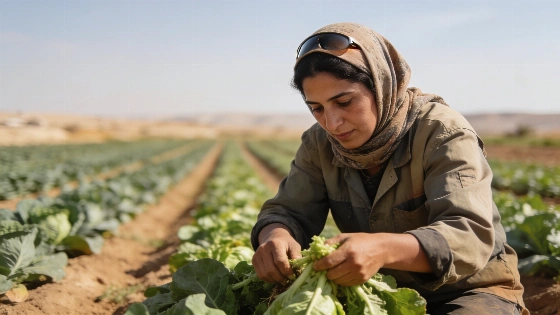
Women make up the active majority of Tunisia's agricultural workforce, says activist Shaima Qasimi. Many face exploitation and struggle to reach services as a 2024 social protection decree awaits implementing regulations.
A worker who falls ill in the fields may have to pay for treatment herself. Activist Shaima Qasimi says many women cannot readily reach legal information or services. Existing safeguards can be just as hard to access.
A social protection decree for female agricultural workers was issued in 2024, but the regulatory texts needed to organise its implementation have not yet been issued, Qasimi said. Separately, Atlas Magazine reported on 31 October 2024 on a proposed social protection fund for Tunisian women farm workers, to be financed through insurance premiums.
International Labour Organization publications address violence and harassment in the world of work more broadly. They do not provide Tunisia-specific figures on agricultural workers.
Qasimi describes women as the active majority in agriculture. She says they carry a substantial share of the work that supports food security. In isolated fields, she says, workers face greater risks of harassment, including verbal abuse. Assault is another risk. Divorced and widowed women may be especially exposed, while exploitation can also involve workers' money and resources.
Those access barriers show up in the working day itself.
Qasimi says farmers or intermediaries may exploit services women provide for little compensation. In summer, food can spoil in the heat. She says women may then go hungry, and food supplied by an intermediary or farmer may be sold to them. Workers pay for their own medical treatment when ill. Qasimi says pesticide exposure during crop treatment can cause illness. In some cases, workers are dismissed, leaving them less able to keep earning.
Even when women know about a law or service, Qasimi says, rural distance and a lack of transport can keep them from accessing it. She describes existing laws and services as deficient. Access to financing can also be blocked by conditions such as land ownership. Applicants may also need access to a water source or groundwater well.
Women often share information directly with one another, forming an informal network that helps fill gaps in institutional support. Civil society groups also work to reach women in different regions, but Qasimi says those efforts are not sufficient. Tunisia's wider pressure on essential services has also been documented in reporting on power disruptions. That account concerns a separate issue from the barriers agricultural workers face.
Qasimi identifies Decree No. 4, issued in 2024 after multiple incidents in which many women lost their lives, as an important gain for social protection. But the regulatory texts have not followed. She points to structural constraints in relevant bodies, including social security institutions and labor inspection.
Qasimi says agriculture also needs clearer sectoral organisation. Sectoral agreements exist, but she says they are not sufficiently specified by area of work. Organising them could clarify job conditions and working hours. They could also set out provisions on accidents and occupational diseases. Qasimi calls for institutions and departments to work with economic actors. She also urges activists and farmers to cooperate with intermediaries to support the sector and its workers.