Libya's Arabian Gulf Oil Company is exploring closer collaboration with Baker Hughes to improve oilfield services and bring in advanced digital technologies, with the aim of strengthening operational capacity and technical standards across the Libyan energy sector.
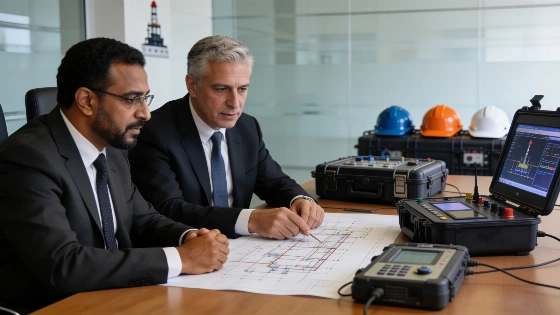
Libya's Arabian Gulf Oil Company (AGOCO) has opened talks with Baker Hughes Libya on expanding oilfield services cooperation and adopting modern digital technologies. A meeting between an AGOCO management committee member and Walid Al-Idrisi, General Manager of Baker Hughes in Libya, fits the company's strategy of building partnerships with leading international service providers. AGOCO is a subsidiary of Libya's state-owned National Oil Corporation (NOC), operating across the country's eastern and western oil assets.
The talks centred on expanding the engineering and technical services available to AGOCO's oilfields. Proposals include digital field technologies and improvements to well operations, alongside advanced production solutions and modern operating software. The companies also reviewed AGOCO's plans to strengthen operational support in Libya, including the use of advanced equipment and the involvement of qualified technical personnel with specialist consulting teams.
Focus on Digitalisation and Technical Upgrades
AGOCO's discussions with Baker Hughes form part of a broader lead to modernise its oilfield operations. The company has also identified digital change and modern technologies as priorities in its ongoing collaboration with SLB, formerly Schlumberger. That work includes initiatives to improve operational processes and boost efficiency and productivity, as reported by the Libya Herald.
The demands behind these technology priorities are clear in AGOCO's western assets. The Hamada and Tahara fields connect by pipeline to the Zawiya refinery area. Tahara resumed operations in 2022 at 2,500 barrels per day, with an eventual rate of 40,000 barrels per day expected. NOC information describes Hamada's production under stable operating conditions as 50,000 barrels of oil per day and 10,000 barrels of condensate per day, alongside 90 million cubic feet of natural gas per day.
In October 2026, unauthorised individuals entered an AGOCO-operated crude-reception station near Zawiya and shut an isolation valve on an 18-inch pipeline carrying crude from Hamada and Tahara. The NOC said the action was taken “without the knowledge or prior coordination of the relevant technical and operational authorities”. It warned that a prolonged closure could disrupt operations and force production suspensions, reducing national oil revenues. In the immediate context of the incident, the affected AGOCO-operated fields and the NC5 pumping station were reported to have a combined production capacity of about 10,000 barrels per day. The incident highlights the need for reliable infrastructure and operational control, backed by technical support. The NOC's account was reported by Anadolu Agency.
AGOCO is also repairing its eastern transport system. Under Project Q-87, the company reported replacing about 100 kilometres of a 34-inch basic pipeline linking the Sarir oilfield with the Hariga oil terminal in Tobruk. In August, technical teams used “hot tapping” to connect the new line while pumping continued. The replacement section later entered service. The project followed NOC directives to increase production and develop oil infrastructure.
Implications for Libya's Oil Sector
AGOCO plans to use advanced digital tools and engineering expertise to raise efficiency and production reliability while meeting international standards. Amid pipeline rehabilitation and operational risks, digital monitoring and upgraded control systems, supported by specialised engineering, could make oilfield and transport operations more resilient. The proposed Baker Hughes cooperation is intended to support current and future projects, helping AGOCO meet the technical demands of Libya's changing energy sector.
Closer ties with Baker Hughes could help AGOCO tackle technical challenges and strengthen its operational capacity. By prioritising digitalisation and technical upgrades, the company aims to build ability to recover and support stable growth in Libya's oil production. The discussions could shape future investment and technology transfer in the sector.