Massad Boulos rejected claims that a US-backed effort to unify Libya would entrench two rival families, but did not confirm the proposal's terms. A separate UN-backed 4+4 agreement calls for a unified executive and presidential and parliamentary elections within 24 months.
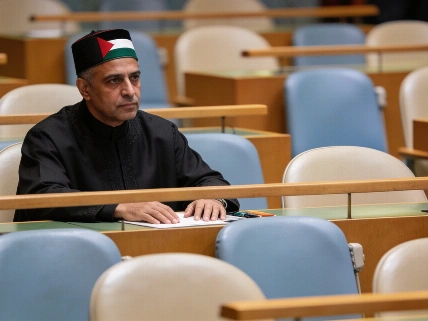
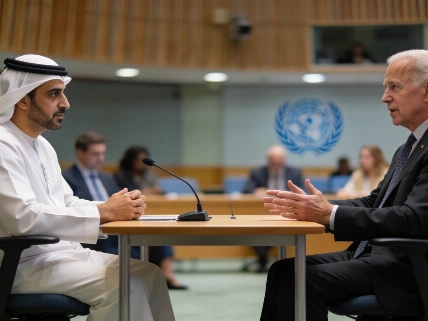
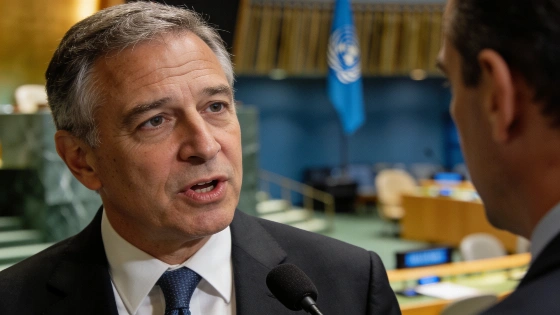
At the UN General Assembly in New York, Massad Boulos was asked about the terms of the US initiative to unify Libya. President Donald Trump's senior adviser for Africa rejected claims that the plan would entrench the unelected rule of two rival families. He did not set out the proposal's terms.
His denial came as separate diplomatic efforts sought to bridge Libya's political divide. On August 30, 2026, representatives in the UN-backed 4+4 mechanism signed an agreement in Tripoli. It calls for a unified executive and presidential and parliamentary elections within 24 months, according to Anadolu Agency's report. The agreement sets a framework and timetable. It does not settle who would hold office during the transition or show that elections will take place as planned. Not a guarantee.
The US initiative and the 4+4 process are separate efforts. On September 26, The National reported that Boulos described a US effort with Türkiye, Egypt and other partners to unify state institutions for a two-year transitional period. Publicly available accounts do not show that the initiative's precise terms have been formally adopted as part of the 4+4 agreement.
Semafor reported on September 22 that one arrangement under discussion could make Saddam Haftar president while keeping Abdul Hamid Dbeibeh as prime minister. The outlet also reported that critics view such a formula as an elite bargain that could delay free elections. Boulos has not confirmed those reported possibilities as the terms of the US initiative. They remain allegations, not an established agreement.
Libya remains divided between the Tripoli-based Government of National Unity and an eastern administration. The 4+4 committee has been discussing how to carry out the election agreement. In August 2025, UN Special Representative Hanna Tetteh presented a three-part roadmap. It calls for an electoral framework that is technically and politically acceptable, unified state institutions through a new government, and structured dialogue with a broad range of Libyan groups. The plan links institutional unification with election rules, but neither guarantees the other.
Regional diplomacy has also called for national unity and a Libyan-led path to elections. On September 21, Egyptian Foreign Minister Badr Abdelatty told Boulos in Cairo that preserving Libya's unity, sovereignty and territorial integrity, and unifying its national institutions, remained a priority, according to the Libyan News Agency (LANA), which reported the meeting. On September 24, Mohamed al-Menfi, president of the Libyan Presidential Council, and Boulos discussed institutional unification and the conditions for presidential and parliamentary elections. The Libya Observer reported that they agreed to continue consultations and turn their understandings into a workable national process.
The stakes reach beyond who holds political office. A unified executive and functioning state institutions would shape the delivery of public services and the management of national resources. An electoral framework seen as favoring established power centers could weaken confidence in the transition. The available accounts do not give enough detail to judge how the US initiative would address those risks. The details remain thin.
Boulos has rejected the charge that the plan would entrench rival families, but has not publicly confirmed its design. The test is whether its terms offer a credible path from institutional unification to inclusive, competitive elections, and how they fit with the 4+4 timetable. Until those terms are clear, his denial does not answer the criticism.
Libya's push for unity has also come up at the United Nations. At a separate meeting, Türkiye's foreign minister urged support for a Libyan-led process, as reported in New York.