Türkiye is stepping up its push for a unified government in Libya. Foreign Minister Hakan Fidan urged world leaders in New York to back an inclusive, Libyan-led political process.
Türkiye is putting its weight behind a single Libyan government again. Foreign Minister Hakan Fidan used a major meeting in New York to call for real action. Libya's political future is still up in the air. Other countries are rethinking their roles. This renewed push comes after several high-level talks. On 20 September 2026, Turkish intelligence chief İbrahim Kalın met Libya's acting defense minister Abdussalam Zubi in Istanbul. Both sides said they were committed to Libya's unity and stability, according to regional reporting and official Turkish statements.
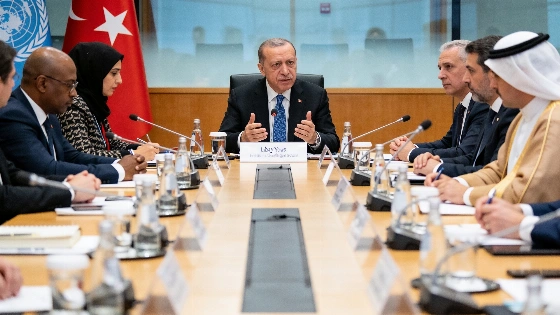
At the "International Support for Peace, Unity and Prosperity in Libya" meeting, held alongside the 81st UN General Assembly, Fidan made Türkiye's position clear. He said Ankara will keep working to stabilize Libya. Türkiye is ready to help with development and security. But Fidan insisted the political process must be led by Libyans and include all sides. This matches the stance of the Libyan Ministry of Foreign Affairs, which keeps calling for unified state institutions and a continued political process. Recent statements from the ministry, reported by Maghreb agencies like Tunis Afrique Presse (TAP) and the Algerian Press Service (APS), underline this point.
Türkiye's stance and the regional picture
Fidan's comments came after his recent visits to Tripoli and Benghazi. He met with key Libyan figures. He repeated Türkiye's support for the "One Libya" policy. Fidan called for a single government and told other countries to work with all Libyan groups, not just a few. Türkiye's approach stands out. Germany, the United Arab Emirates, the UK, France, Italy, Qatar, Egypt, and Saudi Arabia were also at the New York meeting. On 21 September 2026, President Recep Tayyip Erdoğan met Libyan Presidential Council Chairman Mohamed al-Menfi in New York. They talked about bilateral ties and regional stability, showing Ankara's active diplomacy, according to DHA.
Talks at the event focused on the UN-led political process, economic recovery, and security sector reform. Fidan said Türkiye will keep backing the unification and strengthening of Libya's economic and security institutions. Türkiye wants to be a partner and offer targeted help where it is needed. This fits the wider Maghreb context. Regional groups like the African Union and the UN Economic Commission for Africa (UNECA) have stressed the need for strong institutions and economic integration for lasting stability.
International engagement and what comes next
The meeting showed how hard it is to get Libya's divided political groups and their foreign supporters to agree. Fidan's call for talks with all Libyan parties shows he knows outside solutions rarely work. He argued that Libyans must own the process, with other countries only helping-not directing. President Erdoğan echoed this, saying Türkiye would not back any plan that goes against Libya's interests. Ankara's support depends on a process led and approved by Libyans, according to the Libya Observer.
Efforts to coordinate international support for Libya have picked up in recent months. The Moroccan government's support for institutional unification and moves to centralize aid and match it to national priorities are part of this trend. Still, the road to a unified government is blocked by rivalries and competing interests, both inside and outside Libya. During the UN General Assembly, Libyan officials also met with American and African partners. They repeated their commitment to unity and the political process, as confirmed by the Libyan Ministry of Foreign Affairs and regional news wires.
Türkiye's renewed push shows the struggle for influence in Libya is not over. By demanding an inclusive, Libyan-owned process and offering real support for building economic and security institutions, Ankara is making itself a long-term player. For other countries, the message is simple: Libya's stability will take more than words. It needs steady engagement with all sides and a real willingness to let Libyans decide their own future.