Israeli security reporting has focused on the possible effects of the Turkey-Libya maritime agreement on shipping and planned energy links. The dispute remains unresolved: Ankara relies on the 2019 memoranda, while Greece rejects the maritime arrangement.
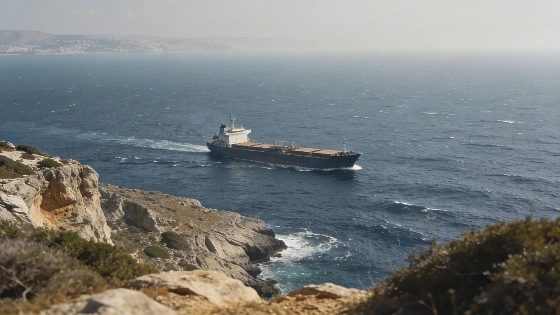
Israel conducts 98% of its imports by sea, according to the reporting. Israeli officials reportedly see risks to shipping routes and energy infrastructure in the Eastern Mediterranean because of the Turkey-Libya maritime memorandum. The issue also matters to North Africa. Libya's coastline lies on major Mediterranean trade routes, and its economy is closely tied to oil and gas.
Israeli intelligence agencies are reportedly monitoring developments around the corridor. They include the Intelligence Directorate, Mossad and the Naval Intelligence Service. These reported assessments are not evidence of operational restrictions. There is no evidence in the available reporting that commercial shipping has been blocked.
The distinction matters. Turkey and Libya's then internationally recognized Government of National Accord signed two memoranda on 27 November 2019. One covered maritime jurisdictional boundaries. The other covered security and military cooperation. Reuters reporting carried by Egypt's Ahram Online records Greece's rejection of the maritime agreement. The disputed corridor is commonly described as running from Turkey's southern coast toward Libya, across waters where Greece asserts maritime rights around islands including Crete and Rhodes.
Turkey still treats the memoranda as part of the legal basis for its position in the Eastern Mediterranean. On 24 September 2026, Türkiye's Ministry of National Defence said Ankara's continental-shelf claims remained in force. The ministry said activities such as laying cables or pipelines and conducting scientific research in areas it considers part of its shelf should be coordinated with Turkey in advance. It also cited the Libya memorandum and continental-shelf boundaries notified to the United Nations on 18 March 2020. These are Turkish government positions, not a delimitation accepted by both sides. Greece continues to regard the deal as unlawful.
The dispute also affects energy planning. Israeli reporting says Ankara argues that a proposed gas pipeline from Israel to Cyprus and onward through Greece to Europe would need Turkish approval. That position rests on Turkey's claims over maritime jurisdiction. It does not show that the project has been stopped, or that other states accept Ankara's view. Undersea electricity and telecommunications cables raise similar questions about routes and permits. Political or operational disruption is another concern.
For Maghreb economies, the wider concern is whether sea lanes and energy infrastructure can be relied on. The reporting does not show that trade has been interrupted. Regional integration and connectivity are also part of the work of the UN Economic Commission for Africa. National reporting by Algeria's APS, Tunisia's TAP and Morocco's MAP tracks developments that affect North African diplomacy and economic links. Their inclusion here does not mean they endorse either side's maritime claims. Algeria's APS dispatches provide an official regional news channel for following North African developments.
Turkey's foothold in Libya is another security concern in the Israeli reporting. The report says President Recep Tayyip Erdoğan secured access to Libyan ports, an air presence and rights to explore for energy resources on Libyan territory in return for military support to Libya. These are reported claims. They do not prove that Turkey has unrestricted control over Libyan facilities or waters. Israeli officials reportedly fear Turkish access could support military infrastructure and give Ankara more influence over activity and civilian navigation beyond areas whose status is internationally agreed.
Other external powers have also featured in coverage of Libya's strategic role in the Mediterranean. Maghreb Insider previously examined Russia's foothold in the country. The current concern is different. Israeli reporting focuses on Turkey's maritime reach and its possible effects on regional energy links.
Israeli security officials reportedly view Ankara's moves as an effort to constrain and isolate Israel. They describe Erdoğan's statements as direct threats. Intelligence services are also said to be monitoring Hamas efforts to build logistical infrastructure in the region by using Turkish influence in Libya. These are reported Israeli assessments, not independently established facts.
The reporting does not establish that the pipeline or undersea cables have been blocked. It does explain why Israel treats the corridor as a security issue. Maritime access matters to its imports, while proposed energy links depend on routes through the Eastern Mediterranean. Turkey maintains its claims. Greece rejects the maritime deal. Ankara says some subsea projects require prior coordination. Shipping, infrastructure planning and regional security remain bound up in the dispute.