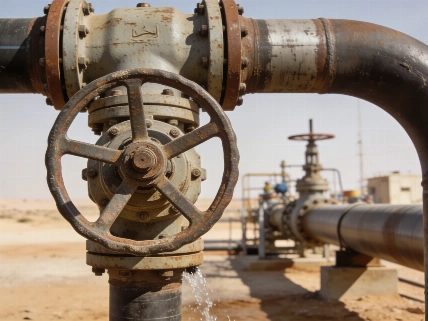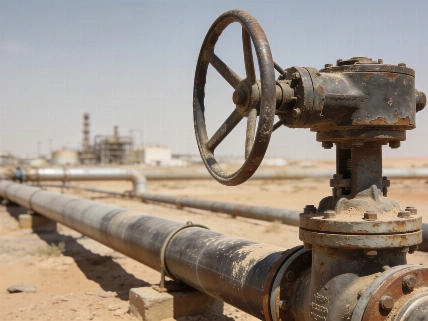
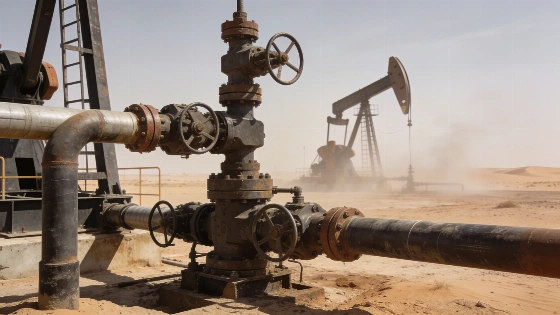
The National Oil Corporation chairman says Sharara has resumed output above 300,000 barrels per day. Libya is exempt from OPEC production quotas, but pipeline flows and terminal loadings will be needed to confirm that the restart is sustained.
Reuters reported that the Sharara-Zawiya pipeline reopened on September 26 after a disruption. The National Oil Corporation (NOC) chairman says Sharara is producing more than 300,000 barrels per day. That is near the field's usual capacity of roughly 300,000 to 320,000 barrels per day. The figure needs checking.
Libya is exempt from OPEC production quotas. A sustained increase could therefore add directly to global supply, rather than be offset by a coordinated quota adjustment. The immediate effect would be marginally bearish for oil prices and prompt market structure. The scale and duration of any impact depend on confirmed flows. Flows must hold.
Reliability remains the key issue. On September 21, an armed group shut valve No. 7 on the pipeline that carries crude from Sharara toward Zawiya. The NOC said the closure shut down the crude pipeline and sharply reduced field output. Reuters reported that production fell by about 200,000 barrels per day, to roughly 100,000 to 105,000 barrels per day. Subsequent reporting cited an official loss estimate of around 130,000 barrels per day.
The route matters. Crude travels north to Zawiya, where the refinery has capacity of about 120,000 barrels per day. Earlier Sharara shutdown coverage shows why a reported restart must be judged by the continuity of operations, not just the headline figure.
Several checks will help show whether the oil is reaching buyers: pipeline throughput, tanker fixtures and loadings at Zawiya, flows near Mellitah, and the NOC's nationwide production tally. Reuters' account of the reopening puts the pipeline and export route at the center of any assessment of output above 300,000 barrels per day. Watch the exports.
The disruption also carried fiscal and infrastructure risks. Libya's NOC linked the valve closure to a significant production decline. The UN Support Mission in Libya warned that disruption to oil infrastructure could invite sanctions and damage state revenues. It also pointed to potential risks for fuel and electricity supplies. Uninterrupted operations matter to domestic stability as well as export volumes.
For traders, a field's reported output is not the same as confirmed exports. Without confirmation that supply is reaching buyers, the price response to a restart headline may fade. Exports are the test. Sharara should be treated as a potential bearish addition to the outlook only if terminal loadings and nationwide output support the chairman's figure.