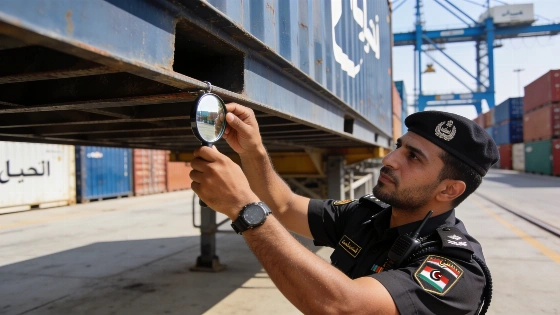
Julyana Free Zone Port has completed IMO-accredited security training for its staff and finalised security plans for basic facilities, moving closer to international compliance certification and affecting Libya's port operations and trade.
Julyana Free Zone Port in Libya has completed an International Maritime Organization (IMO)-accredited Port Facility Security Assessment training course for staff in its Security and Safety Department. The initiative aims to strengthen security procedures and align the port’s operations with international standards.
The training covered the development and implementation of security plans for critical port areas, including container loading and storage berths. Participants worked through 28 hypothetical incident scenarios involving hazardous goods, classifying risks and practising appropriate responses. The course also covered coordination with security agencies, along with practical inspection techniques using equipment such as reflective mirrors.
The work falls under the IMO’s International Ship and Port Facility Security (ISPS) Code, in force since 2004 within the maritime-safety structure of the amended 1974 International Convention for the Safety of Life at Sea. The Code requires port facilities to assess security risks, prepare security plans and appoint responsible officers. It also requires procedures for responding to incidents.
Security Plans Finalised for Basic Port Facilities
After the training, security plans were completed for the container terminal, oil platform, dry-bulk grain terminal and general-cargo terminal, as well as administrative buildings. The plans are awaiting final approval, a step towards the port’s compliance certification under IMO standards.
Port facility security officers received targeted instruction on putting the plans into practice. At least eight officers are expected to sit an evaluation exam for certification under IMO standards.
Impact on Port Operations and Trade
Julyana Free Zone Port management says improved security procedures, round-the-clock operations and modern equipment have accelerated cargo handling and reduced vessel waiting times. It also says the changes have increased trader demand to use the port for imports, strengthening its role in Libya’s trade and logistics sector. Security and carrier restrictions can affect freight movements involving Libya. Intercargo’s country guidance notes that “security and carrier restrictions may apply to shipments involving Libya”.
Julyana is part of a wider national maritime network that includes Tripoli, Misrata, Benghazi, Tobruk, Al Khoms and Zuwarah. The Logistics Cluster also maintains a Libya ports assessment among its logistics-capacity resources, reflecting the importance of port infrastructure and access to national supply chains. In this context, security planning at a facility handling containers, oil-related activity, grain and general cargo has implications beyond the terminal itself.
The training is part of ongoing work to complete the port’s security assessment and secure internationally recognised compliance, which is expected to support its competitiveness and operational reliability in the region.