
Libya's Ministry of Housing and Reconstruction is seeking to accelerate domestic building materials manufacturing by leveraging Tunisian investor expertise, aiming to reduce import reliance and strengthen the country's construction sector.
Libya's construction ambitions are colliding with a chronic shortage of locally produced building materials, forcing the government to look beyond its borders for solutions. In a calculated move, Minister of Housing and Reconstruction Issam Al-Tamouni has opened the door to Tunisian investors, betting that their manufacturing know-how could be the missing link in Libya's stalled reconstruction drive.
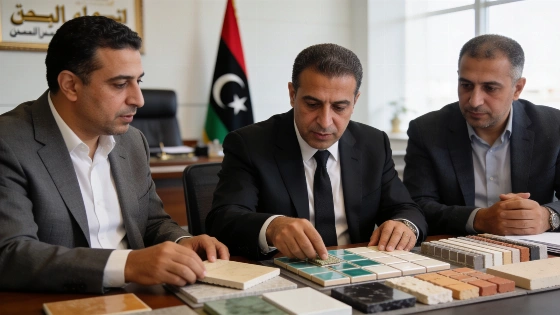
At the heart of this initiative is a push to localise production of critical materials-ceramics, sanitary ware, and other construction essentials-that have long been imported at a premium. The Ministry's Tripoli headquarters became the stage for a high-stakes meeting between Al-Tamouni, the Chairman of the Savings and Real Estate Investment Bank, and a delegation of Tunisian investors with a track record in Libyan industry.
Tunisian Experience on Display
The Tunisian delegation did not arrive empty-handed. They presented concrete evidence of their previous involvement in Libya, including the installation of a ceramics factory and a facility for sanitary materials in the Gharian region. These projects, though modest in scale, serve as proof-of-concept for what cross-border industrial cooperation could achieve if scaled up.
For Libya, the stakes are clear: every imported tonne of building material is a drain on foreign currency reserves and a missed opportunity for local job creation. By tapping Tunisian expertise, the Ministry aims to build a foundation for domestic manufacturing that could eventually supply the country's vast reconstruction needs-and perhaps even position Libya as a regional supplier.
Strategic Motives and Regional Implications
This outreach is not just about bricks and tiles. It is a calculated attempt to diversify Libya's industrial base and reduce exposure to volatile import markets. The involvement of the Savings and Real Estate Investment Bank signals that the government is prepared to back these ventures with institutional support, not just rhetoric.
For Tunisian investors, the Libyan market offers scale and demand that are increasingly hard to find at home. Their willingness to re-engage, despite Libya's well-documented political and security risks, is a sign that the potential rewards outweigh the hazards-at least for now.
Libya's overture to Tunisian manufacturers is a pragmatic response to the country's reconstruction bottlenecks. But unless these talks translate into actual investment and operational factories, the initiative risks becoming another round of diplomatic optimism with little to show on the ground. The Ministry's willingness to court foreign expertise is a step in the right direction, but the real test will be whether Libya can convert investor interest into functioning industry-before its reconstruction ambitions are once again left waiting for materials that never arrive.