

Libya is using a workshop on virtual assets to prepare for its MENAFATF mutual evaluation, as officials and institutions examine financial-crime risks and the legislation and coordination needed ahead of the review.
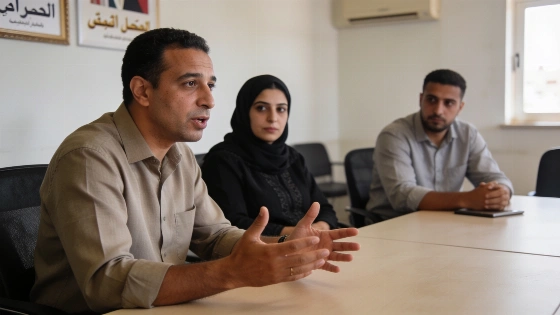
At a Tripoli session on Monday 19 October, Major General Abdul-Wahid Abdul-Samad joined representatives from national institutions and UNODC to discuss risks linked to virtual assets.
The Ministry of Interior announced the workshop yesterday, describing it as preparation for Libya's mutual evaluation by the Middle East and North Africa Financial Action Task Force (MENAFATF). The event was titled "Virtual Assets: Between Regulation and Criminalization."
Institutions examine financial-crime exposure
Abdul-Samad is Director of the Minister of Interior's Office and Head of the Ministry's Anti-Money Laundering and Counter-Terrorism Financing Office. Participants considered the legal framework for virtual assets and digital currencies, including their potential exploitation in money laundering and terrorist financing.
The participating entities included the Prime Minister's Office, the Central Bank of Libya, the Ministry of Foreign Affairs, the Audit Bureau, the Legal Affairs Department, the Libyan Financial Information Unit, the Internal Security Agency, the General Information Authority, the Libyan Post Telecommunications & Information Technology Company (LPTIC), the Stock Market, the National Economic and Social Development Board and the Libyan Technology Foundation, alongside other relevant institutions and authorities.
MENAFATF mutual evaluations follow the FATF methodology, which assesses both compliance with 40 recommendations and effectiveness across 11 immediate outcomes. Those outcomes cover inter-agency coordination and international cooperation. They also assess supervision of financial institutions and virtual asset service providers (VASPs). FATF standards require VASPs to apply customer due diligence and monitor transactions; for occasional virtual-asset transactions, the threshold is USD/EUR 1,000.
Legislation and coordination are on the agenda
Discussions also covered ways to develop legislation and improve coordination among institutions. The Ministry connected those efforts to Libya's preparation for the evaluation, which will assess the country's approach to the risks associated with virtual assets and digital currencies.
In a separate AML/CFT effort in October, the Central Bank of Libya and the US Federal Reserve discussed banking-sector cooperation and work with K2 Integrity to strengthen checks, audits and monitoring of suspicious transactions connected with letters of credit. The Libyan News Agency reported that the discussions also addressed cross-border smuggling and circumvention of trade and banking rules.
A separate government effort on emergency power planning involved talks between Libya's planning ministry and GECOL, covered in an earlier report; that initiative is distinct from the Interior Ministry's financial-crime work.
The Ministry said the workshop aims to strengthen compliance with international standards and protect the national economy. It also said the effort is intended to combat emerging financial crimes.







