After last summer's blackouts and unrest, Libya's planning ministry and GECOL are discussing the first phase of an emergency power plan and the money needed to carry it out.
Last summer, extreme heat coincided with acute electricity cuts across Libya.
Demonstrations turned violent. Protesters blocked roads, and state and government buildings were barricaded. The unrest threatened the Abdel Hamid Aldabaiba Tripoli government.
Demonstrators stormed the Mellitah Complex in an attempt to stop gas supplies to Italy. They hoped the gas could instead reach power stations. The protests reflected pressure on infrastructure that supplies gas for exports and domestic electricity generation.
Emergency measures target generation and networks
Planning Minister Mohamed Al-Zaidani met today with Al-Bashir Al-Marash, chairman of the General Electricity Company of Libya (GECOL), to discuss sector challenges and project financing. Their talks covered the requirements for the first phase of GECOL's "Urgent Emergency Plan" and priority work expected to affect public services directly.
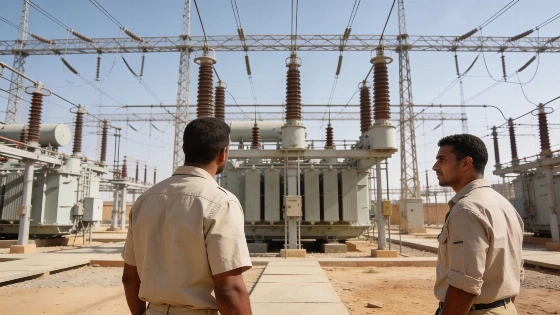
The Ministry says the plan would improve the operational readiness of power-generation units. It calls for essential maintenance and overhauls. Work would also address problems in transmission and distribution networks. GECOL would procure spare parts and equipment. The Ministry says these steps should make electricity supplies more reliable and stable for citizens.
The challenge extends beyond seasonal demand. In August and September, drone attacks damaged oil infrastructure in western Libya. Electricity and water infrastructure were also hit. Damage to the South Zawiya substation contributed to widespread outages, Arab News reported. The withdrawal of General Electric technical staff from a power station left more than 700 MW unavailable out of about 1,300 MW of installed capacity at the facility.
Global Energy Monitor data listed 24 operating power stations in Libya, with combined installed capacity of 15,172 MW. Gas-fired plants accounted for 80.6% of that capacity. Oil-fired plants accounted for 16.1%, while solar represented 3.3%, according to the NRG Map catalogue. Installed capacity does not show how much electricity is actually available to the grid. Outages and fuel shortages can cut output. Damage or maintenance needs can do the same.
On 17 October, GECOL began rehabilitating units 6 and 7 at the West Tripoli power plant, after 14 years out of service. The company expects the work to restore about 200 MW to the system. Repairs had started but were not reported as complete.
Funding remains central to implementation
The meeting called for coordination between the Planning Ministry and GECOL. Other relevant stakeholders are also expected to help secure the funding and resources required for the projects. The Ministry said implementation should address existing challenges and maintain service continuity. It also said the work should meet the needs of citizens and economic sectors.
At a 14 October meeting, the United Nations Security Council said electricity and water shortages reflected the continued deterioration of public services, particularly in southern Libya. Fuel shortages were also part of that picture. The Council linked critical infrastructure investment to unified budget arrangements. The UN meeting transcript reported that disruptions to oil production had cost about one million barrels of output, valued at roughly $100 million. A September blockade of the Sharara-Zawiyah pipeline cost the country nearly $95 million in oil revenue.
A separate account of urban-planning forum preparations described efforts to connect recommendations with national priorities and UN goals. This meeting focused on the financing and operational requirements of electricity projects.
The immediate requirement is securing the resources needed to carry out the plan's first phase.