Libya's Planning Institute says forum preparations aim to turn urban-planning recommendations into measurable projects linked to national development priorities and UN goals.
At a Wednesday meeting, Planning Minister Mohamed Al-Zeidani discussed preparations with Planning Institute Director General Mustafa Al-Arqat and an Egyptian delegation headed by Mohamed Al-Khatib. The institute reported the meeting yesterday.
The practical test is whether the forum's recommendations can become measurable initiatives tied to Libya's development priorities. The Planning Institute says it wants to carry those recommendations through to projects that can be implemented and followed up.
Building a national planning framework
The forum is intended to offer a platform for exchanging knowledge. Its programme will review established approaches alongside new solutions for smart cities and sustainable urban planning. It also includes coordination with national institutions and partners at regional and international levels.
The Planning Institute is expected to help shape the forum's scientific themes and attract specialist expertise. It is also expected to widen cooperation with research institutions and universities. The stated aim is to connect the forum's findings with national development priorities and sustainable development goals.
That planning work sits within a wider national effort to coordinate development and investment. On 14 October 2026, UN Special Representative for Libya Hanna Serwaa Tetteh told the Security Council that full implementation of the Unified Development Programme (UDP) was increasingly urgent. She described it as a way to strengthen coordination over public expenditure and development investment across the country. Her remarks are available in the UN Security Council briefing.
AUDA-NEPAD opened an office in Tripoli in October 2026 to support Libya's planning and monitoring capacity. The office is also intended to support reporting. Libya prepared its first biennial national report on implementation of the second ten-year phase of Agenda 2063 in 2025. Training rounds on monitoring and reporting followed in November 2025 and August 2026. Libya is due to host a continental conference of national planning authorities in 2027. AUDA-NEPAD modelling cited in reporting projects that accelerated implementation of Agenda 2063 could be achieved in Libya by 2033.
Research links and development goals
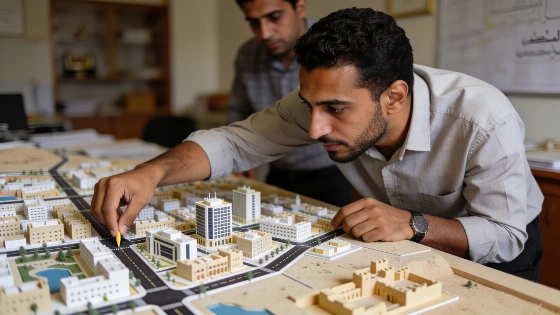
Participants discussed using scientific and technical expertise to develop an integrated national vision for Libyan cities. They said the approach should reflect economic conditions and urban needs. It should also account for social specificities. The discussion covered urbanization challenges and ways to improve service efficiency. Participants also considered how cities could adapt to future changes.
The forum's agenda is linked to the United Nations 2030 Agenda for Sustainable Development. Goal 11 concerns inclusive and safe cities. It also covers resilience and sustainability. Goal 9 addresses industry and infrastructure, including innovation. Goal 13 focuses on climate action. Goal 17 covers partnerships for the Sustainable Development Goals.
In a 2021 overview of Egypt's new-city programme, Al-Ahram Weekly reported that the New Administrative Capital was expected to become the country's first smart city in operation. Thirteen other projects were under construction. New Alamein and New Mansoura were among them. The projects also included East Port Said and Nasser City in western Assiut. New Ismailia was another. The Egyptian delegation's presence brings a regional planning perspective to the discussions.
Libya's wider external engagement includes academic and trade ties. A Maltese delegation discussed those ties during Malta-Libya talks in Benghazi.
The preparations form part of efforts to develop Libya's urban-planning system and promote modern technology in city management. The stated aim is to improve services and support cities that are smarter and more sustainable. The institute's role includes turning forum recommendations into implementable, measurable initiatives and projects.