Human Rights Watch says at least 31 people were executed after unfair military trials. At least 50 detainees at Gernada now face imminent danger, as outside governments come under pressure to use their influence over the LAAF.
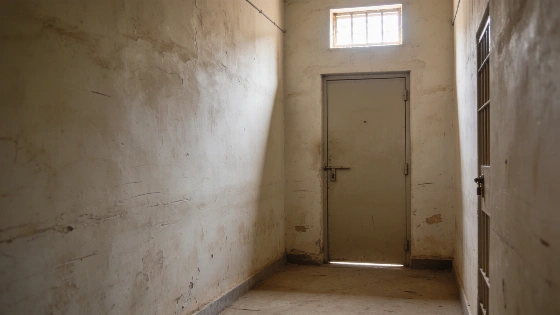
Libya's Supreme Court had ruled that military courts could not try civilians for terrorism and crimes against the state. Yet executions followed secret trials, and at least 50 detainees at Gernada military prison now face an imminent risk of execution. The prison is about 100 kilometres east of Benghazi. It is largely under military control, outside the jurisdiction of ordinary judicial authorities, Human Rights Watch said.
Human rights groups documented at least 31 executions between late August and September 10, 2026. HRW described them as the first confirmed executions in Libya since 2010. On August 23, the Libya Arab Armed Forces military prosecutor announced that 10 people had been executed by firing squad after convictions for murder and terrorism-related offenses. HRW's subsequent count covered at least 31 people.
Executions followed secret military trials
Many of those executed had been arrested in Derna and Benghazi during or after the conflict between the LAAF and opposing armed groups, which ran from 2014 to 2018. Between 2018 and 2021, military courts in eastern Libya convicted hundreds of civilians in secret trials. The cases included people described as real or perceived critics of the LAAF. At least 22 defendants received death sentences.
Amnesty International reported that some convictions relied on confessions allegedly extracted under torture by the Internal Security Agency, an armed group affiliated with the LAAF. In 2019, a higher military court reduced at least two death sentences to life imprisonment on appeal. HRW said those defendants were executed this year.
Local human rights groups reported that defendants received no prior notice of their trials. Families could not attend. Journalists and human rights organizations were barred too. Some defendants were denied lawyers of their choice. Others could not meet their lawyers privately before or during trial. Defendants were prevented from presenting their cases or challenging evidence, and authorities did not provide written, reasoned judgments.
Human Rights Watch said the LAAF was carrying out executions after secret trials based on confessions allegedly obtained through torture. The cases went through military courts that Libya's Supreme Court had ruled should not try civilians. HRW said the trial practices violated the right to a fair hearing before an independent and impartial court.
Pressure falls on Haftar's foreign backers
In November 2025, the constitutional chamber of Libya's Supreme Court ruled unconstitutional the part of Law No. 4/2017 that gave military courts jurisdiction over civilians accused of terrorism and crimes against the state. The decision limited military-court jurisdiction over civilians, but eastern authorities proceeded with sentences from earlier military trials. Human Rights Watch's account of the executions cites the ruling. It says military prosecutors and judges in eastern Libya are affiliated with the LAAF or allied armed groups.
Families were not told in advance that executions would take place. Authorities withheld the bodies, asked relatives to identify the dead, then buried them without family members present. They also warned relatives against holding funerals. Human Rights Watch said secret executions and denial of a final visit with relatives could violate the international prohibition on torture and cruel treatment, and cause severe mental suffering.
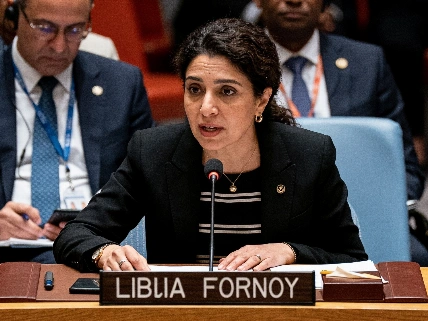
The United Nations addressed the executions at the Security Council. Hanna Serwaa Tetteh, the UN secretary-general's special representative for Libya and head of the UN Support Mission in Libya, said 58 people convicted in cases involving terrorism-related offenses had been executed in Benghazi over the previous two months. Those cases included alleged membership in proscribed groups and the killing of military and civilian personnel. Denmark's representative at the Council voiced deep concern that more than 50 people had been executed in eastern Libya since August.
Libya remains divided between the internationally recognized Government of National Unity in the west and the LAAF and affiliated forces in the east and south. The United Nations and the GNU condemned the executions. A separate eastern Libya report also examined claims that remained unverified.
Human Rights Watch said governments that fund or train the LAAF, or lend it legitimacy, have leverage to press its leaders publicly and privately to stop executions. Deputy Middle East and North Africa director Bassam Khawaja said every execution under these conditions was an irreversible injustice. He urged governments with influence to act before another took place. HRW also called on the authorities to halt further executions, including those threatening at least 50 prisoners held at Gernada.
The organization opposes the death penalty under all circumstances and calls on Libya to abolish it. Until then, it says, authorities should impose a moratorium. "Libya went more than 15 years without an execution, and the LAAF has shattered that moratorium in a matter of weeks," Khawaja said. "The lives of at least 50 more people now depend on whether Haftar's forces, and the governments that back them, choose to stop this."