
A report says Webuild's contract for an eastern Libyan motorway has ended and that the company obtained interim relief in Turin. Available evidence does not independently confirm the termination, court ruling, bond action or key project figures.
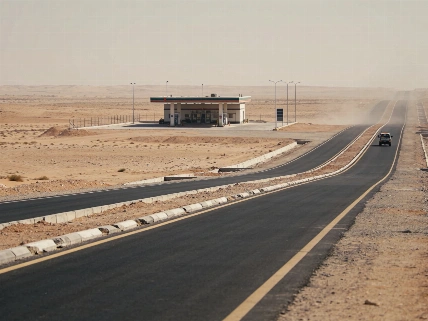
Il Foglio says a 440-kilometre road project in eastern Libya is at the centre of a contract dispute that has reached a court in Italy. The paper reports that Webuild's contract for the "Highway of Peace" was terminated. Available search results contain no independent confirmation from Webuild, the Libyan contracting authority or an Italian court. That remains unverified.
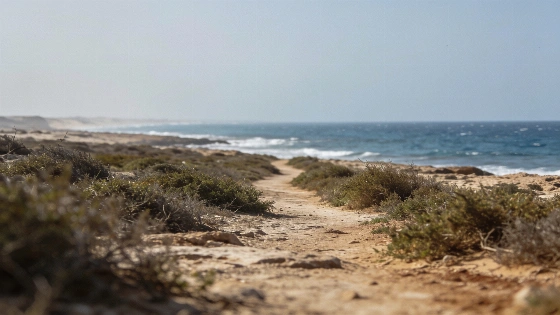
The proposed motorway would run along the Cyrenaican coast, from al-Marj to Emsaad near the Egyptian border. The report describes it as part of a wider road corridor linking Libya with Tunisia and Egypt. The available material does not independently establish the route's length, the project's status or its claimed cross-border role.
The same report says the contract was awarded in 2013 to a consortium then led by Salini Impregilo, with a value of about €1 billion. It links the delay to a dispute over security conditions and contractual duties. Webuild is said to have argued that conditions were not safe enough to start work. The Haftar camp reportedly accused the company of failing to perform. The underlying agreement has not been independently reviewed, so its allocation of security and implementation risks remains unclear.
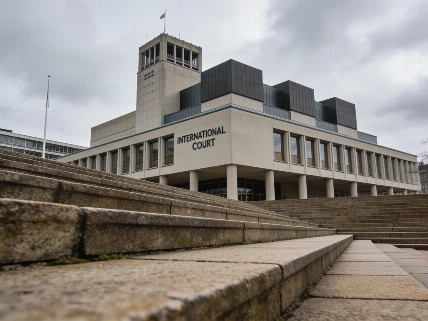
The report also cites an application under Article 700 of Italy's Code of Civil Procedure and says Webuild obtained urgent interim relief in Turin. No independently verifiable court document or official announcement was found. The final status of the proceedings is unclear. There is also no verified public notice that a performance bond was called, suspended or enforced. Its value and terms, along with any related compensation claim, cannot be confirmed.
Other claims concern sections of the wider road programme. The report says Todini Costruzioni Generali obtained sub-lot 4.3 in November 2025, after sub-lot 4.2. It says Prime Minister Abdulhamid Dbeibah attended a signing in Tripoli and promised support for site security. Available results do not include an independently confirmed contract, an official record of the event or evidence that construction has begun. The reported €700 million value and expected start by the end of 2026 are also unverified. No start is confirmed.
A road connecting Libyan territory with the Tunisian and Egyptian borders could support movement across North Africa. Its practical value would depend on financing and safe access. It would also need a delivery framework that works. The UN Economic Commission for Africa's work on regional integration offers broader policy context, but it does not confirm this project. Official reporting by Tunisia's TAP, Algeria's APS and Morocco's MAP can help distinguish confirmed announcements from unsubstantiated claims.
Webuild's reported withdrawal could matter for Italian business in Libya, but the available material does not establish the company's final contractual position. The article describes Cassa Depositi e Prestiti as a minority shareholder in Webuild and says Italian investors lack a central coordinating body. Neither point is independently verified here. It also says a parliamentary comparison of the Mattei Plan's implementation in 2024 and 2025 listed Libya as a country where the plan had not been implemented. That claim needs confirmation from the underlying document.
The stalled-road account sits alongside a separate political process involving the Haftar camp, including the UN-led election track. Neither development settles the reported contract dispute. Until the parties or relevant institutions publish documents, three questions remain open: Was the contract formally terminated? What did any court order? Was a bond pursued? For investors, announcements of regional cooperation do not replace confirmed financing or security arrangements. A construction plan must also be ready to carry out.