
Libya's National Development Agency is reviewing how services should work on proposed toll-road corridors linking free-zone ports with southern borders. Regional plans point to the ambition, while other highway projects show the funding and delivery hurdles.
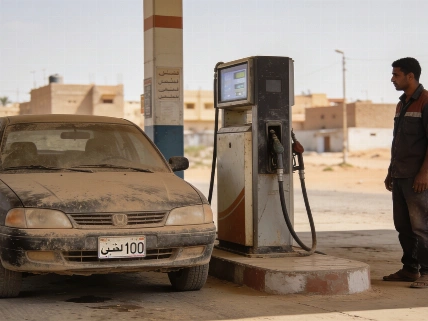
Director General Mahmoud Al-Furjani met the International Toll Road Services Department to examine how roadside services would work on Libya's International Road. The review covered workflows and service standards, alongside technical and operational requirements.
Roads meant to carry transit trade need facilities that can support their users. The NDA said its review is part of ongoing monitoring of those facilities. It announced no new service system. Nor did it report a completed road segment or set a timetable.
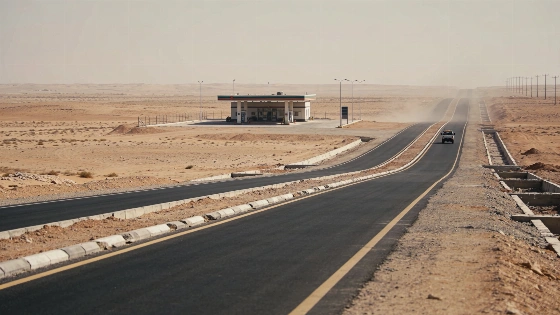
The NDA is building international-standard roads toward Libya's southern borders from the Sirte Free Zone Port and Benghazi's Julyana Free Zone Port. When finished, the routes are expected to become Libya's first toll roads. The agency aims to connect Mediterranean ports with Niger and Chad, making Libya a transit link between Europe and landlocked Sub-Saharan African states.
A separate route is planned by the Tripoli government. It would connect Misrata Free Zone Port to the Niger border via Tamenhent Free Zone near Sebha. No completion timetable has been given for any of these roads.
The regional case for north-south links also figures in AUDA-NEPAD's work in Libya. The African Union development agency has opened an office in Tripoli to help public institutions set priorities and prepare projects. It also aims to attract partners and address obstacles to implementation. Its stated corridor priorities include Misrata-Agadez in Niger and Benghazi-Kufra toward Sudan, framing Libya as a potential bridge between North Africa and the Sahel. This regional planning agenda is separate from the NDA projects and does not establish a shared delivery plan. Further details are available from AUDA-NEPAD.
Other regional road proposals show the financial and delivery demands of cross-border links. Al-Ahram Weekly reported that the proposed Egypt-Chad road would run 1,102 kilometres through Libya. Egypt estimated the cost of the section on its territory at 22 billion Egyptian pounds. The outlet also described a proposed 585-kilometre Sallum-Benghazi coastal road, including the Egyptian section. These are separate proposals. They do not show that the NDA's port-to-border roads have secured financing or construction schedules.
Libya's wider highway programme has also run into delays. Libya Observer reported that the Webuild contract for the first stage of the roughly 440-kilometre Highway of Peace, from Al-Marj to Emsaad on the Egyptian border, was terminated after years of delays and before construction began. The same outlet reported that Italy's Todini Costruzioni Generali received a contract estimated at 700 million euros in November 2025 for a section of the project. These developments concern the Highway of Peace, not confirmed progress on the NDA corridors.
AUDA-NEPAD has cited a separate alternative-highway proposal as potentially serving about two million people and carrying 30-40% of national freight. That estimate concerns the alternative route, not the roads discussed at the NDA meeting. It should not be treated as a forecast for the toll-road corridors. Projected demand can support an infrastructure case, but it does not establish whether a particular route is funded or complete. Nor does it show that the road is ready for traffic.
The NDA said the review aims to provide a safe and suitable environment for road users while keeping facilities aligned with operational needs. Its agenda covered workflows and requirements. The agency did not announce a new service system or report a completed road segment.
Separate discussions on border-screening discussions focused on security and migration cooperation; the NDA meeting dealt with road operations. Both concern efforts by Libyan authorities to manage facilities and services, but the available information establishes no direct link between them.
The corridors' strategic case rests on execution. The roads and their service facilities must be completed and put into operation before Libya's transit-hub ambition can be realized. The service review is a preparatory step; the measure of progress will be whether the planned links and services become usable infrastructure.
The Libyan News Agency is a relevant official channel for future public updates. The information available here establishes no project schedule. Its website is the Libyan News Agency.