
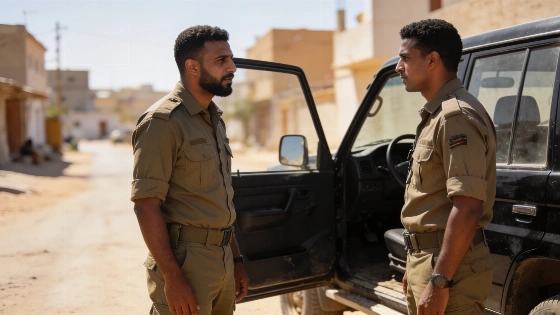
The Subul al-Salam brigade says it seized more than 1.3 million pills from a suspected smuggling hideout in Kufra after a firefight injured three soldiers. Tunisian reporting said several suspects were detained, but no charges or court proceedings have been confirmed.
Kufra lies roughly 1,700 km from Tripoli, in Libya's southeast.
The Subul al-Salam infantry brigade said it targeted a hideout there used to store narcotics and other contraband. Reuters reported that more than 1.3 million pills were seized after an exchange of fire with smugglers. Three soldiers were injured. The military gave no estimate of the seizure's financial value.
Tuniscope reported that several suspects were detained. No verified information has emerged about charges or court proceedings, and authorities have not said where the detainees are now.
Independent accounts have not confirmed casualties among the suspects or the seizure of weapons. The military has not identified the pills' chemical contents. The same details appeared in Reuters.
The brigade operates under the Land Forces General Staff and is associated with eastern Libyan forces linked to Khalifa Haftar. Images released by the military showed round white pills in clear bags. A "1" and the words "made in Germany" appeared on the packaging. Those markings do not establish where the pills were made, and the photographs cannot identify their chemical contents.
The military has not put a price on the seizure.
Its market value remains unknown, whether measured at wholesale or retail. Without verified information about the substance, its intended market or its planned route, the quantity alone cannot establish the operation's wider economic impact.
The raid disrupted one suspected trafficking site. The available reporting does not establish that it formed part of a coordinated national campaign or disrupted routes beyond that hideout. Nor does the information show that Libya's drug networks have been dismantled.
The United Nations said in January that Libya has become a major regional transit hub for synthetic drugs and other narcotics. They are destined for local users and markets elsewhere in Africa. The UN Office on Drugs and Crime has described how criminal groups exploit instability that followed Muammar Gaddafi's overthrow in 2011.
Kufra's position in Libya's far southeast puts the operation far from the capital. The country is divided among competing authorities and armed forces, complicating security across its large territory. The raid's wider reach and lasting effect remain unestablished.
The operation is separate from Libya's discussions about border-screening technology described in Libya's screening talks. Those discussions concern screening at border crossings; the Kufra raid targeted a suspected smuggling site. The available information does not establish a coordinated response.
In October, a court in the Western Mountains region sentenced five people to death for importing more than two million psychotropic pills, the Libyan attorney general said. The region lies about 160 km southwest of Tripoli. The attorney general's account describes a separate case, and the available information does not link its defendants to the Kufra seizure.