Russia is deepening military access in eastern Libya while the country remains politically divided. Its expanding footprint could increase pressure on oil infrastructure and complicate efforts to reunify the country.
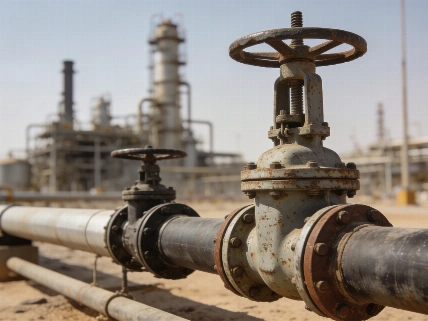
Libya's institutions remain divided, and international efforts to set an election timetable face resistance. That political fracture is giving Russia room to expand its military access. Libya sits between North Africa and the Sahel. Its oil-export infrastructure and Mediterranean ports give the country significance well beyond its borders.
A stronger Russian position could constrain NATO's freedom of movement in the Mediterranean and complicate counterterrorism efforts in the Sahel. It could also give outside powers more leverage over infrastructure that Libya's economic recovery depends on.
Washington's stated priority under envoy Massad Boulos has been to bring the Tripoli-based Government of National Unity, or GNU, and Khalifa Haftar's eastern faction closer to unified institutions. The plan includes political and economic institutions. It also aims to unify the country's military institutions, with higher national oil production among its goals. Oil exports remain central to public finances. Disputes over security or revenue-sharing can affect the state's ability to fund services and reconstruction.
The UN Support Mission in Libya, or UNSMIL, has announced an agreement calling for elections within two years. Actors in both east and west have resisted it. In October 2026, UN Special Representative Hanna Tetteh discussed Libya's political and security situation with Turkish Foreign Minister Hakan Fidan in Ankara. They also discussed the need to advance the electoral process, according to a UN Security Council briefing. The meeting did not resolve divisions among Libya's political and military actors.
Russia has reinforced the divide through its state-controlled outlet RT Arabic, which has promoted opposition to the UN proposal, according to the original analysis. If the agreement reaches the UN Security Council, Moscow could use its veto to obstruct the process. Libya's lawmakers have also undergone a recent leadership shift. A parliamentary change has not settled the election timetable.
Russia began moving military assets from Syria to Libya after the fall of the Assad regime in 2024. Aircraft-tracking data reported in December showed a sharp rise in flights between the two countries. Deliveries were said to include air-defence equipment and radars for S-400 and S-300 interceptor systems.
Reports have also described about 1,800 Africa Corps personnel in Libya. They have cited deliveries of thousands of tonnes of military equipment since March. Those figures are estimates cited by the Institute for the Study of War, not officially confirmed Russian numbers. Africa Corps succeeded Wagner after Moscow brought the force under the Russian Ministry of Defence following the 2023 mutiny.
During a visit to Benghazi, Russian Deputy Defence Minister Yunus-Bek Yevkurov held talks with Khalifa Haftar and his son Khaled on further military cooperation. The meetings took place on May 31 and June 1. Al-Ahram Weekly reported that the discussions focused on Russian-Libyan ties.
At a parade in Benghazi in May 2025, forces led by Haftar displayed Russian equipment reported to have come from Syria. The display contrasted with the more limited equipment received by the internationally recognized GNU in Tripoli. Reports have also said Khaled Haftar signed an agreement in Moscow to expand military and security cooperation.
U.S. National Geospatial-Intelligence Agency findings reported this summer described accelerated Russian activity at six Libyan air bases. Reporting identified Al-Khadim and Al-Jufra. It also named Al-Qardabiyah and Tamanhint. Brak al-Shati and Ma'aten al-Sarra were identified as well. This is best understood as Russian use of existing Libyan facilities, not as six wholly Russian-owned bases.
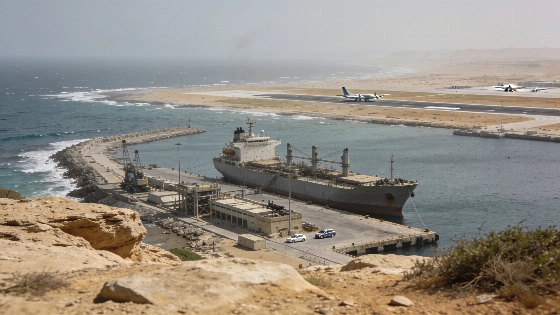
Reported deployments include air-defence radars and MiG-29 fighter jets. Russian personnel have also reportedly operated drones. Moscow has been associated with plans to develop Tobruk's port for deep-draft naval and cargo vessels. That remains a reported plan, not a completed project. Available reporting has not established an official Russian announcement of a permanent naval base in Libya.
After losing its Syrian position, Russia's regional logistics have become more reliant on Libyan routes. Eastern ports and airfields are viewed as potential support lines for Africa Corps operations in Burkina Faso. Mali is another country where the force operates. Niger is also among the destinations. The route adds strategic importance to Libya's ports and airfields, while raising concerns about military supplies crossing borders. It does not establish that every reported shipment or facility is dedicated to Sahel deployments.
If developed, Tobruk could complement Russia's retained port facilities in Tartus, Syria, and expand Moscow's ability to challenge NATO maritime operations. The United States has counterterrorism interests across the Sahel. Its military presence varies by country and should not be assumed to be uniform across Burkina Faso. The same applies to Mali and Niger. A larger Russian presence could still complicate regional security cooperation and heighten concerns about weapons diversion to armed groups. The original analysis also warns that Russian-backed counterinsurgency tactics could contribute to radicalization and undermine U.S. objectives.
Washington's options extend beyond diplomacy. Gradual integration of eastern and western Libyan forces could build security cooperation through regular meetings. Joint exercises could form part of that effort. Training is another proposed measure. U.S. military access should be conditioned on excluding Russian defence equipment. The proposed UN election roadmap needs coordinated backing from the United States and its partners, including countries that have supported Haftar. Washington could also condition engagement with Haftar and his sons on limiting their cooperation with Moscow.
Sanctions on Russian aircraft, enforced through denial of overflight and refuelling, could raise the cost of sustaining deployments. The United States could also support Ukrainian efforts to counter Russian oil-smuggling operations in the Mediterranean. Another proposed step is helping Kyiv contest Russian messaging in Libya.