
Morocco has narrowed its infrastructure gap. Now it must turn public investment into domestic engineering and higher productivity, while creating skilled jobs and managing water constraints.
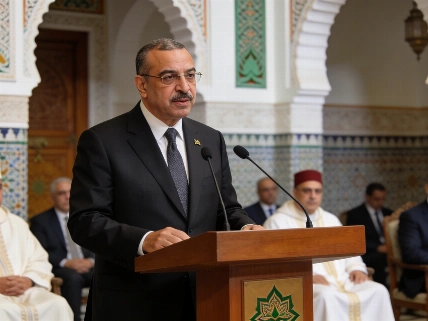
Once construction crews leave a major project, imported systems often remain in operation. Writer Amine Jamaï argues Morocco needs to build more of the technology behind its infrastructure at home. Otherwise, he says, large spending programmes will deliver weaker productivity gains than their scale should allow.
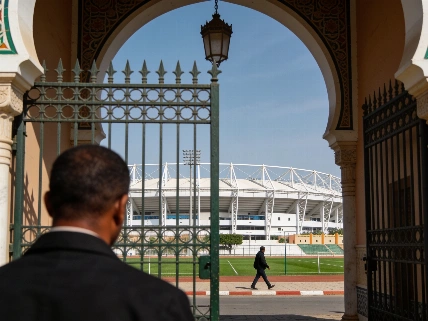
Jamaï does not dispute the need for major projects. Ports and railways were essential, he says. Highways, energy complexes and water projects were essential too. The harder question is what Morocco retains when construction ends. Too often, he argues, imported equipment stays in place. Local expertise and patents do not necessarily follow, nor does higher-value production.
The World Bank's Morocco Country Partnership Framework for FY2026-2035 recognizes major gains in infrastructure and social services. It also flags weak private-sector job creation and high youth unemployment. Female employment remains low. Regional disparities persist, while water scarcity and gaps in human capital constrain productivity.
The World Bank's broader prescription is a more productive, private-sector-led growth model, backed by stronger competition and simpler regulation. Completing large projects or restoring growth does not, by itself, guarantee lasting productivity gains or resilience to future shocks.
Jamaï measures investment efficiency through the incremental capital-output ratio, or ICOR: how much investment an economy needs to generate an additional point of GDP. He cites an HCP estimate that put Morocco's ICOR near 7 in 2014. South Korea and Taiwan recorded ratios between 3 and 4 during their industrial takeoff. Jamaï also points to World Bank research that, in his account, confirms a structural decline in the marginal efficiency of investment. These comparisons do not directly measure project quality, but they sharpen the question of how effectively capital turns into output.
The question carries weight because investment remains exceptionally high. Morocco's gross investment rate exceeds 32% of GDP, and public investment is set to reach 380 billion dirhams in 2026, according to figures cited in the original argument. Budget reporting published in October 2026 put investment expenditure at 75.7 billion dirhams for the first eight months of the year, up 11.4% from the same period in 2025. Current expenditure rose about 10.8% to 268.2 billion dirhams. The measures cover different scopes and periods, but together show the scale of public spending.
Jamaï argues that physical accumulation is producing too little overall productivity growth. Foreign suppliers still provide many of the advanced systems embedded in major projects. They also supply components and software. Much of the machinery comes from abroad as well.
Building infrastructure was the first task. It cannot carry the full burden of industrial strategy. The challenge is especially visible in energy and water. State utility ONEE has set out a 2026-2030 investment plan reported at 177 billion dirhams for electricity and 42.1 billion dirhams for drinking water. The same reporting says the private sector is expected to finance 72% of the combined amount. These projects could expand essential capacity, but their longer-term return will also depend on skills development and local supplier participation. Moroccan firms must be able to win technically demanding work.
Public purchasing could help create markets for local technology. Jamaï proposes using procurement as an industrial tool rather than treating it as a routine transaction. He points to US federal programmes such as SBIR/STTR, which reserve part of public research and development budgets for innovative small businesses. The programmes support early-stage technical development and potential commercial access. He also cites South Korea's integration of industrial policy with procurement. Singapore, he says, has used foreign investment alongside collaborative research to anchor technology-intensive activity.
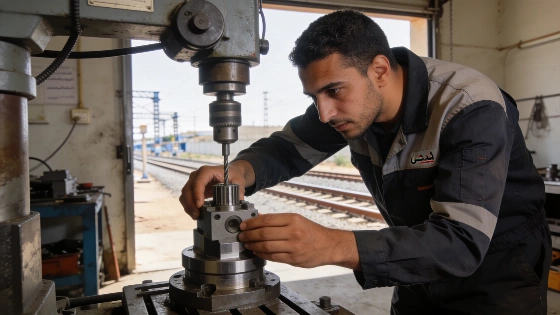
Jamaï identifies three barriers in Morocco. Procurement committees wary of legal risk may favor imported turnkey bids. R&D spending remains around 0.7 to 0.8 percent of GDP, while banks often require physical collateral for lending. Engineers leave when advanced design work is scarce.
His proposed remedies include pre-commercial procurement for local prototypes. International suppliers could face industrial compensation and co-development requirements. He also calls for better financing for research and equipment, with support for intellectual property.
Any such approach would have to work within the public procurement framework. Decree No. 2-22-431 of March 8, 2023, sets out transparency as a governing principle. It also requires competition and equal access for bidders. The Trésorerie Générale du Royaume administers Morocco's electronic public procurement platform, where notices and documentation are published. Carefully designed innovation tenders could seek technical collaboration while maintaining open and fair competition.
The cancelled Casablanca shipyard concession, covered in the shipyard tender report, is a separate case. It puts the industrial-capacity question in concrete terms: who can operate and build complex assets, and under what model?
Morocco's industrial supply chains are developing, but that does not prove local technological capacity has spread across the economy. COBCO, a joint venture between Al Mada and China's CNGR, began production at Jorf Lasfar in June 2025. Renault and Stellantis plants are operating in the country's automotive sector. These projects show the potential for export-oriented manufacturing. The further test is whether domestic firms gain a larger engineering role, while workers take on more of the higher-value stages of production.
Jamaï also calls for guaranteed direct payments to subcontractors within thirty days. He wants expanded credit for applied research. These are proposals, not measures the article says have already been adopted. They are intended to help local firms take on technical work and retain engineers Morocco has trained. The World Bank's assessment also points to limited human capital and uneven employment opportunities as continuing constraints on productivity.
Morocco's automotive sector includes operating Renault and Stellantis plants. COBCO began production at Jorf Lasfar in June 2025.