
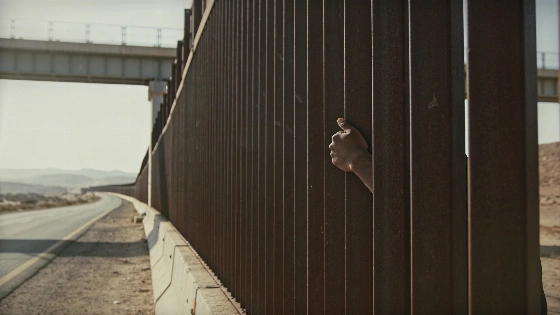
Rabat uses migration pressure to advance its Western Sahara position. US backing and European dependence offer leverage, but drought and court rulings leave the strategy exposed.
In the summer of 2026, more than 72,000 people crossed from Morocco into Ceuta over two months, according to Spanish government figures cited by Reuters.
About 10,000 people were still in the enclave on October 4, in a city with a population of roughly 80,000. That day, police cleared a beach camp of around 3,000 people and moved them to temporary centres for processing or possible return to Morocco. The numbers show the scale of a border emergency. They do not prove that Rabat directed every crossing.
Ceuta and Melilla are also subject to Moroccan territorial claims, making migration pressure around them politically sensitive. For Spain, the effects reach beyond border management: accommodation and public services face immediate strain.
Rabat can use migration crises and economic pressure to test Spain's resolve without open conflict. The leverage depends on a fragile bargain: the European Union keeps funding cooperation even as courts block trade arrangements that treat Western Sahara as Moroccan territory.
Brussels has publicly backed Spain and called for stronger financial and technical assistance to Morocco for border management. Atalayar estimates that EU and Spanish support for Moroccan border control could exceed €1 billion by 2027. Its total combines different periods and commitments, however, so the figure needs to be treated cautiously. Funding may help manage arrivals, but it also gives Rabat leverage in a relationship both sides depend on.
The regional EU package for 2025-2027 was €675 million, according to figures cited in the original account. In September 2026, €114.7 million was allocated to address the situation in Ceuta and support involving agencies such as Frontex. Those sums should not be confused with the broader, less fully documented estimate of cumulative border-control funding.
That arrangement leaves Rabat room to keep testing the limits. A direct attack on Ceuta or Melilla would mark a different escalation, turning a border dispute into a European security crisis. NATO's Washington Treaty would not automatically apply; any decision would depend on the treaty's geographic scope and political interpretation.
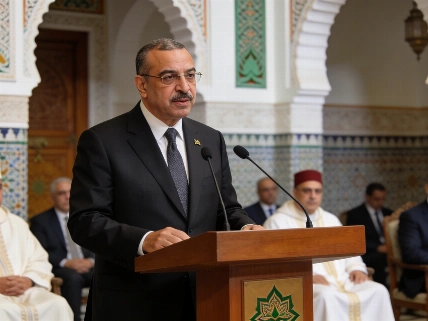
Morocco's constitutional language keeps its territorial claims open-ended. Article 42 of the 2011 Constitution makes the king responsible for defending the kingdom's territorial integrity within its "authentic borders," without defining their geographic extent.
The reform followed the February 20 Movement protests of 2011. The Consultative Commission for Constitutional Reform heard proposals from political parties. It also heard from unions and civil society, while the monarchy and royal advisers closely supervised the final text. Critics say the reform preserved the king's central political and religious authority while making him guarantor of the country's territorial integrity.
The dispute is clearest in Western Sahara. Morocco controls approximately 80% of the territory de facto and seeks its full incorporation. The International Court of Justice's 1975 advisory opinion found that historical ties claimed by Morocco or Mauritania could not override the Sahrawi people's right to self-determination. In October 2024, the Court of Justice of the European Union annulled fisheries and agricultural trade agreements because they covered Western Sahara's resources without the consent of its people.
Rabat presents autonomy under Moroccan sovereignty as a proposed framework for resolving the dispute. Coverage by Morocco's state news agency MAP reflects that official position. Algeria's public position, conveyed by its foreign ministry and reflected in reporting by the Algerian Press Service, supports the Sahrawi right to self-determination. The parties remain far apart. Diplomatic backing for their competing positions has not settled the territory's final status.
The legal dispute remains unresolved. Western Sahara talks have not settled the question of Sahrawi self-determination.
Morocco's territorial claims should not be treated as one uniformly defined set of disputes across North Africa. The best-established disputes relevant here concern Western Sahara and Spain's Ceuta and Melilla enclaves. Claims involving the Canary Islands or other neighbouring states' territory should not be presented as equivalent official positions without clear supporting evidence.
Algeria is Morocco's most immediate military constraint. Diplomatic relations between the two countries have been severed since 2021, and their land border has been closed since 1994. Algeria backs the Polisario Front. The original account says Algeria's defence budget is well over four times Morocco's, but comparisons vary by year and methodology. The ratio is an estimate, not a fixed measure. A conventional conflict would force Rabat to focus on its eastern flank rather than apply pressure elsewhere.
The rivalry also narrows Europe's options. Algeria's gas exports matter to European buyers, while Morocco depends on European markets for trade, tourism and investment. These ties do not automatically translate into political control, but a prolonged rupture would carry costs for all sides. APS reporting and the Algerian foreign ministry's public position both show that Western Sahara remains central to Algiers' regional diplomacy.
According to the original account, Spain has postponed high-level bilateral summits with Algiers to avoid angering Rabat. Madrid is left balancing competing pressures rather than resolving them. The closed Morocco-Algeria border also limits regional economic integration, adding a practical cost to the rivalry.
Morocco's position also depends on Washington. After the Abraham Accords, the United States recognised Moroccan sovereignty over Western Sahara. Rabat also relies on US military supplies to modernise its forces. A change in US policy or priorities would weaken a central pillar of its diplomatic position.
The strategy depends on continued allied support and an economy able to absorb its costs. European governments must also choose containment over confrontation. Migration pressure cannot secure recognition or consent on its own, while an economic and diplomatic rupture would be difficult for Rabat to afford.
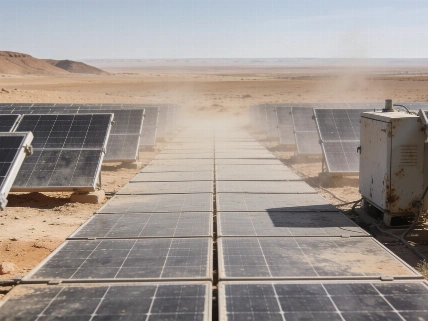
Morocco lacks Algeria's oil and gas revenues. Its economy relies on tourism and remittances, while phosphates remain important and agriculture is exposed to severe drought. Water scarcity threatens farm output and rural livelihoods. Military spending and the cost of maintaining infrastructure and deployments in Western Sahara compete with domestic needs amid unemployment and poverty.