Renewed talks in 2026 have brought Morocco's autonomy proposal and competing positions back to the negotiating table. The shift has not settled Western Sahara's status or resolved the dispute over Sahrawi self-determination.
In October 2025, the UN Security Council put Morocco's autonomy proposal at the center of renewed negotiations over Western Sahara. Direct contacts resumed in early 2026 after nearly seven years without this format of talks.
That changed the terms of diplomacy, not the status of the territory. Morocco says Western Sahara should remain under its sovereignty, with autonomy. The Polisario Front insists that the Sahrawi people must be able to determine the territory's future, including whether it becomes independent.
During the first quarter of 2026, UN Personal Envoy Staffan de Mistura held three rounds of direct discussions in coordination with the United States. Morocco, the Polisario Front, Algeria and Mauritania took part. At meetings in Washington on January 18 and 19, Morocco presented an expanded version of its 2007 autonomy plan and answered participants' questions. The Polisario presented proposals based on a document it had submitted to the UN Secretary-General in October 2025.
Negotiations have also included reports that Morocco is preparing a draft autonomy statute. That points to discussions of institutional details. It does not show that the Polisario has agreed. A draft UN report says any self-governance arrangement should meet high international standards, include meaningful consultation with the Sahrawi people and take account of self-determination. The report describes autonomy as a potentially viable outcome, not an agreed settlement.
Morocco's diplomatic position has grown stronger over several years. The United States recognized Moroccan sovereignty in 2020. Several European countries later backed Morocco's autonomy plan. The Security Council's decision put the proposal at the center of negotiations, but Western Sahara's final status remains unresolved.
The talks have a clearer basis. Their destination is still contested.
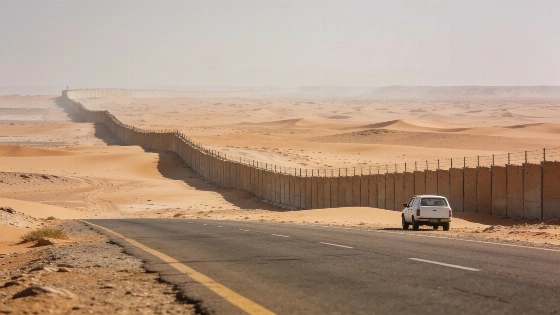
Morocco exercises administrative control over roughly 80% of Western Sahara and has incorporated the territory into its national political and economic structures. The Polisario Front, backed principally by neighboring Algeria, administers areas east of Morocco's fortified barrier and refugee camps around Tindouf in southwestern Algeria. Algeria is a party to the diplomatic process. Mauritania's participation reflects the dispute's wider Maghreb dimension.
A cease-fire without a referendum
Spain's withdrawal in 1975 left competing claims over the former colony. Morocco and Mauritania asserted control over parts of the territory. The Polisario Front, a Sahrawi nationalist movement founded in 1973, sought self-determination and later established the Sahrawi Arab Democratic Republic (SADR). Mauritania withdrew from the conflict in 1979. Morocco then consolidated control over most of the territory.
A UN-brokered cease-fire in 1991 established the UN Mission for the Referendum in Western Sahara (MINURSO) and set out a plan for a referendum on the territory's future. Disagreement over the terms of the vote stopped it from taking place.
The cease-fire broke down in 2020. Since then, the UN has described low-intensity hostilities, including firing incidents that raise security concerns for MINURSO personnel.
Control shapes daily life and economic stakes
The divide is clear in conditions on each side. Moroccan-administered areas are heavily securitized, while people in the Tindouf camps face protracted refugee life. Each setting has distinct political and humanitarian constraints. Western Sahara also has economic significance. The Bou Craa phosphate mine is operated by a Moroccan state-owned subsidiary, and Morocco has incorporated the territory into its wider economic administration. Resource activity does not settle the competing claims over sovereignty or the territory's political status.
Morocco's regional diplomacy also includes calls for African operational cooperation on security, as covered in its security push. This is separate from negotiations over Western Sahara, but it forms part of Morocco's wider engagement with regional partners.
The parties still describe the dispute in incompatible terms. On October 5, 2026, Polisario representative to the UN Sidi Mohamed Omar rejected what he called partial solutions. He said the movement would discuss only measures that allow Sahrawis to freely determine their future, including independence, according to the Sahara Press Service. Algerian President Abdelmadjid Tebboune likewise argued that a resolution should remain within established legal and international frameworks and should not be imposed on the Sahrawi people, the agency reported separately.
The central question is whether renewed talks can bridge the divide between Morocco's sovereignty claim and the Polisario Front's demand for self-determination. The new negotiating basis gives diplomacy more direction. It does not erase the referendum that never took place or the competing claims. Until the parties reach an acceptable settlement, the shift is diplomatic momentum, not a resolution.