
US backing for Morocco's Western Sahara autonomy plan has strengthened Rabat's position with Spain. The July influx into Ceuta, Madrid's emergency response and renewed pledges of cooperation show how migration and the sovereignty dispute are testing the relationship.
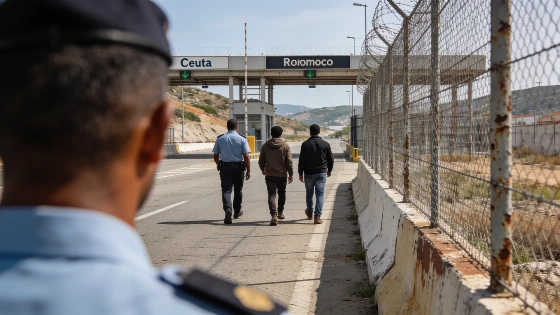
More than 80,000 people entered Ceuta during the mass influx on 30 July, according to the European Economic and Social Committee. The committee also reported more than 140 deaths and severe humanitarian consequences. The episode showed how much Spain relies on Moroccan border controls. Analysts cited in the original reporting said Moroccan security forces were passive while Spanish authorities seemed unable to manage the crossings. Those accounts do not prove that Rabat deliberately orchestrated the movement.
Migration is only part of the dispute. Morocco's main diplomatic goal is to win international support for its claim over Western Sahara. Washington's backing has strengthened Rabat's hand in its dealings with Madrid. The United States recognised Moroccan sovereignty over the territory in 2020. In August 2026, it again backed Morocco's autonomy plan as the sole basis for a lasting settlement, according to reporting on the US position.
The relationship has a long history. Morocco was the first country to recognise American independence, in 1777, and became a US counterterrorism partner after the 11 September 2001 attacks. In 2020, Morocco agreed to establish relations with Israel under the Abraham Accords as the United States announced its recognition of Morocco's claim over Western Sahara. Relations with Spain are formally set out in the 2022 joint declaration. The Moroccan state news agency MAP has highlighted that framework.
Rabat has also sought backing from other partners. A report on Mali's position describes another state supporting Morocco's claim over the Sahara. This outreach is part of the wider contest over recognition of Western Sahara. It has not resolved the dispute.
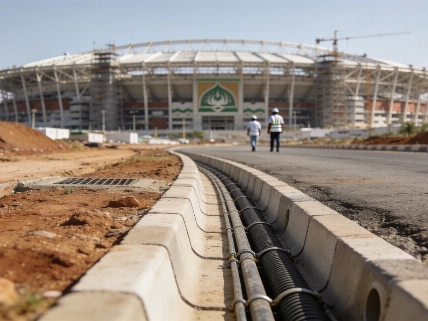
This summer, King Mohammed VI renamed the Atlantic road linking Tiznit to Dakhla the Donald J. Trump Motorway. The gesture may flatter the US president. It also reflects the warm state of Rabat-Washington ties and the importance Morocco attaches to development in its southern provinces.
Morocco feels vindicated and more willing to press Spain, says Intissar Fakir of the Middle East Institute. Ignacio Gutiérrez de Terán of the Centre for Contemporary Arab Studies argues that Rabat can use migration and Ceuta and Melilla as bargaining chips in the Sahara dispute. Military agreements with Israel cover drones and surveillance technology for Western Sahara. They add to the sense that Morocco has leverage, but do not prove any link to the July crossings.
Ceuta shows the cost of border dependence
There is a precedent. In 2021, the Spanish government approved the admission of Polisario Front leader Brahim Ghali to a hospital in Logroño. Morocco then relaxed surveillance at Ceuta's border. More than 8,000 migrants crossed in a single day.
Journalist Sonia Moreno, author of Morocco, the Awkward Neighbour, says the methods differed. In 2021, rumours about football stars played a part. This time, false claims spread on social media and exploited the desperation of people who wanted to leave. Moreno also points to youth unemployment of 37% and an average population age of 30. She describes Morocco as a country under pressure. These figures form part of her account of the social context. They do not prove what caused the influx.
Moreno suggests that a Spanish bill granting nationality to Sahrawis born under Spanish administration and their direct descendants may have angered Rabat. She says Morocco viewed the bill as interference in its internal affairs. That is her explanation, not an established account of the influx's cause.
Fakir warns that if Rabat orchestrated the movement, it would be a damaging way to pressure a trusted partner with billions in annual trade. She asks what the European Union is paying for if Morocco cannot control the border. Bernabé López says Morocco overplayed its hand. He calls it a paradox that Spain entrusts border control to a country that does not recognise the border. Bilateral commerce makes stable cooperation important, though the article gives no specific trade figure.
Spain responded with emergency capacity and longer-term spending. The government announced €250 million for infrastructure improvements in Ceuta. It opened two facilities at the port with capacity for up to 1,700 people. Spain also continued processing cases involving adults and unaccompanied minors. La Moncloa's account sets out those measures. Spain's embassy in Morocco also warned that irregular entry into Ceuta or Melilla does not give people the right to remain in Spain, move to the mainland or travel freely within the European Union.
In New York, Prime Minister Pedro Sánchez said Spain would not turn migrants into an enemy. He also described a breakdown in Moroccan border control during the July surge. Madrid had asked Rabat for explanations and changes, he said. Spain's humanitarian message sits alongside its demand for effective border cooperation.
Spain's foreign minister, José Manuel Albares, rejected the idea of negotiating shared sovereignty over Ceuta and Melilla with Morocco. He said that option was not under discussion. Separately, Moroccan Foreign Minister Nasser Bourita told Albares that Rabat would provide full cooperation to speed the return of migrants still in Ceuta after the end of July, according to reporting based on Spanish foreign ministry sources. Operational cooperation can continue. The sovereignty dispute remains firm.
Spain's reliance on Moroccan cooperation is a strategic vulnerability, not just a migration-management arrangement. US support may embolden Rabat. But using a sudden influx to pressure a neighbour risks damaging the trust cooperation depends on. That distinction now matters.