
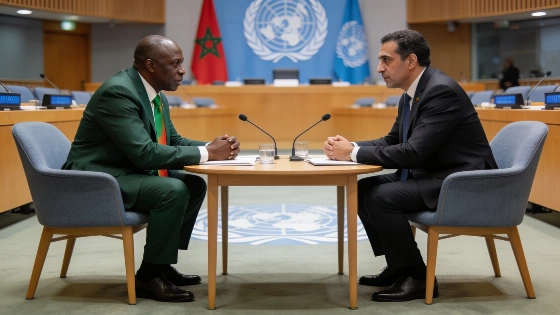
Mali has openly backed Morocco's claim to the Sahara, deepening ties between the two countries. Bamako's support for UN Security Council Resolution 2797 marks a clear stance in the regional dispute.
Mali has stepped up its support for Morocco's claim over the Sahara. Foreign Minister Abdoulaye Diop made Bamako's position clear, backing Morocco's sovereignty and territorial integrity. On September 24, 2026, at the 81st United Nations General Assembly in New York, Diop called Morocco's autonomy plan the "only serious and credible basis" for settling the Western Sahara dispute. This matches the latest statements from both governments and reports by Morocco's official news agency MAP.
Diop tied Mali's position directly to UN Security Council Resolution 2797, which was adopted on October 31, 2025. That resolution reaffirmed the political process and extended MINURSO's mandate until October 31, 2026. Mali had already shifted its policy in April 2026, moving from neutrality to backing Morocco's autonomy plan. The Malian foreign ministry's stance has been confirmed by independent regional outlets and appears in the official records of the Moroccan Ministry of Foreign Affairs.
Strategic partnership and regional stakes
Mali and Morocco have built their renewed partnership on respect for sovereignty and territorial integrity. This was formalized at the 4th High Joint Commission in Bamako in July 2026. The joint statement from that meeting, cited by Sahara Online and regional diplomatic sources, stressed the need to respect borders and the unity of both countries. This is especially important given the security problems in the Sahel and Maghreb, where border issues remain sensitive for national governments and groups like the African Union.
Both countries are also pushing economic and commercial ties. They want to grow trade, improve infrastructure, and work together in energy. The UN Economic Commission for Africa (UNECA) says Morocco is now a major investor in West African infrastructure. Mali's alignment with Rabat is expected to help launch more joint projects in transport and renewable energy. The July 2026 commission also looked at new ways to boost agricultural trade and cross-border logistics. This fits a wider trend of South-South cooperation in the Maghreb and Sahel.
Diplomatic moves and broader implications
Mali's public support for Morocco and the latest UN resolution is more than a bilateral move. It sends a message to other countries and regional players. This comes as Bamako and Algiers have started talking again, according to several francophone outlets. Mali's support for Rabat stands out against the backdrop of North African rivalries. Moroccan Foreign Minister Nasser Bourita has called Resolution 2797 a "historic turning point" and "irreversible" for the settlement process, as reported by the North Africa Post and regional diplomatic briefings.
This shift in Mali's foreign policy puts sovereignty and mutual respect at the center. The focus on territorial integrity matches Mali's own worries about internal unity and border security, especially with ongoing instability in the Sahel. Regional wire services like Algeria's APS and Tunisia's TAP have covered the move, showing its weight for Maghreb and Sahel politics.
With Mali's position now clear, the map of alliances around the Sahara issue is easier to read. The move strengthens Morocco's diplomatic hand and shows Bamako's intent to base its foreign policy on sovereignty and mutual respect. For those watching North African and Sahelian politics, this alignment is a sign of how states use international forums and partnerships to push their interests. More details on the changing diplomatic scene are available at the Moroccan Ministry of Foreign Affairs portal.