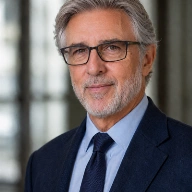
Yassir Zouaoui is returning to Casablanca after about 20 years with McKinsey to lead its Morocco and Francophone Africa business. The office has around 120 consultants, and private-sector clients account for nearly 90% of the firm's business in Morocco.
Mehdi Lahrichi had led McKinsey's Morocco and Francophone Africa business since 2021. Infomédiaire reported on September 22, 2026, that Yassir Zouaoui had been appointed Managing Partner for the region. The business is managed from Casablanca.
Zouaoui has spent about 20 years at McKinsey. The handover puts him in charge of the firm's Moroccan operation and its wider Francophone African business. He is returning to Casablanca.
Zouaoui began his McKinsey career in Casablanca, then moved to Dubai. He spent nearly a decade there in regional and international roles. He also led the firm's global Economic Development practice. His work has included advising corporations, investors and governments across North Africa, the Middle East and Sub-Saharan Africa on organizational and economic transformations.
His new role brings that experience back to the office overseeing McKinsey's business in Morocco and Francophone Africa. The wider policy setting includes efforts to strengthen investment and economic transformation across the continent. The UN Economic Commission for Africa, or UNECA, covers these issues in its regional work on structural transformation. Morocco's official news agency MAP regularly reports on the country's industrial and investment priorities.
McKinsey says its Casablanca office has around 120 consultants. It is part of an African network of six offices with nearly 500 employees. In Morocco, private-sector organizations account for nearly 90% of the firm's business. McKinsey also advises public-sector clients on economic, sectoral, organizational and digital transformations. The figures are McKinsey's. They describe its own footprint and client mix, not the size of Morocco's wider consulting market.
Morocco remains the business anchor. Zouaoui has described the country as undergoing significant transformations. He said the firm aims to help clients address strategic challenges and deliver tangible results. His client work has included sector-growth initiatives and major investment programs focused on competitiveness and social and economic outcomes.
Earlier this year, McKinsey named Zouaoui one of its first Distinguished Partners. The designation recognizes expertise that has shaped client work, firm capabilities and external practice.
Gregor Theisen, McKinsey's Senior Partner and Managing Partner for Africa, said the appointment reflects Morocco's role in the firm's continental development strategy. He described Casablanca as a hub for talent and strategic innovation. A Benghazi business report covered another form of regional commercial engagement. Zouaoui's appointment concerns McKinsey's Morocco and Francophone Africa operation specifically.
McKinsey also points to several hundred alumni in Morocco. The firm recruits from local academic institutions and works with nonprofit organizations. Its Moroccan office contributes to the firm's global social-impact initiatives.
The handover keeps a leader with local roots and broad international experience at the head of a business whose work in Morocco is overwhelmingly private-sector. The appointment makes Casablanca's role as McKinsey's base for Francophone Africa more explicit. The test will be whether that reach leads to the client results Zouaoui says the firm intends to deliver. The regional economic context is broad, but this is a corporate leadership change, not a government agreement or a shift in Maghreb diplomatic policy.
UNECA's work on African economic transformation and MAP's reporting on Morocco's economic priorities offer context beyond McKinsey's own footprint. These agendas relate to the types of transformation work McKinsey says it undertakes. They do not establish a direct link between public policy initiatives and the appointment.