American executives landed in Benghazi for the Libyan-American Development and Reconstruction Forum, pushing for concrete partnerships and project launches even as the US State Department maintains its highest-level travel warning for Libya.
American business leaders stepped off planes in Benghazi this week, undeterred by the US State Department's most severe travel advisory for Libya. The official warning, updated as recently as August 31, 2026, bluntly instructs travelers to prepare wills and end-of-life documents before entering the country. Yet, the second Libyan-American Development and Reconstruction Forum opened its doors to a full roster of US company representatives and Libyan officials, signaling that the appetite for deals outweighs the risks on paper.
At the heart of the forum, Belgasem Haftar, Director General of the Libya Development and Reconstruction Fund, challenged both sides to move beyond talk. "We must convert these opportunities into real projects," he insisted, pressing for tangible progress in sectors ranging from infrastructure to knowledge transfer. The Fund's leadership made clear that the days of endless presentations are over-what matters now is execution and measurable impact on Libya's battered cities.
American Companies Weigh Risk Against Opportunity
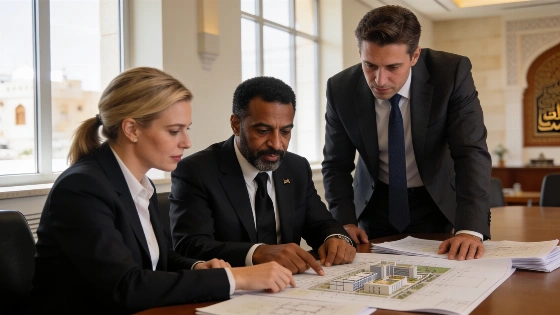
The presence of the US-Libya Business Association delegation in Benghazi is not a minor gesture. With Libya still classified as Level 4-Do Not Travel-by Washington, the decision to send executives into the country is a calculated bet on the ground reality diverging from official risk assessments. The forum's agenda focused on matching American technical expertise with Libya's urgent reconstruction needs, especially in cities like Benghazi where large-scale projects are either underway or in the pipeline.
Libyan officials, for their part, are eager to leverage international know-how to rebuild critical infrastructure and boost national capacity. The forum's organizers positioned this second edition as proof of their commitment to opening Libya's doors to specialized foreign partners, even as the security environment remains unpredictable.
Implementation Over Rhetoric
What sets this year's forum apart is the explicit demand for action. Haftar's remarks left no room for ambiguity: partnerships must translate into service improvements and concrete capacity-building, not just memoranda and photo opportunities. The Libya Development and Reconstruction Fund is under pressure to demonstrate that international engagement can deliver results, not just headlines.
This push for implementation echoes a broader trend in Libya's foreign economic outreach. As seen in recent developments with South Korea, Libyan authorities are actively courting international partners to accelerate reconstruction and diversify sources of expertise.
Strategic Stakes and the Reality Gap
The contradiction between official US travel guidance and the on-the-ground presence of American business delegations exposes a fundamental tension. For US companies, the potential rewards of early entry into Libya's reconstruction market are too significant to ignore, even if it means operating in a legal and security grey zone. For Libyan stakeholders, attracting credible foreign partners is essential to moving beyond years of stagnation and conflict.
Despite the persistent risks, the willingness of American firms to show up in person sends a clear message: Libya's reconstruction is no longer a theoretical opportunity. The real test will be whether these high-profile forums can deliver more than promises. Until the first contracts are signed and projects break ground, the gap between ambition and reality remains wide-but the direction of travel is unmistakable. The era of waiting for perfect conditions is over; those willing to act now will shape Libya's next chapter.