
Libya has discussed inspection technology and staff training with two US suppliers. No purchase or deployment has been confirmed, and the talks sit within a broader agenda on security coordination and migration management.
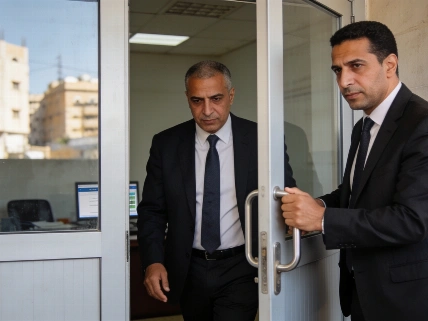
During his US visit, Interior Minister Emad al-Trabelsi met representatives of Rapiscan Systems and S2 Global. The companies presented screening technology for Libya's border inspections.
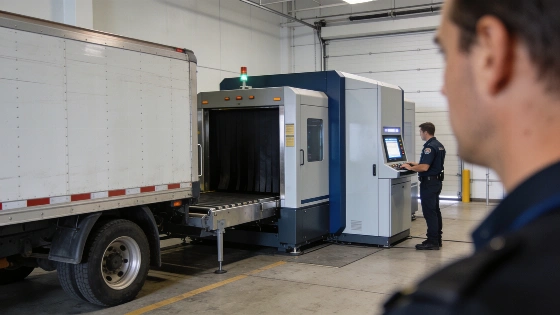
The Ministry of the Interior said the talks covered non-intrusive inspection systems for ports, airports and land crossings. The proposal suggests Libya is interested in screening at different entry points. No purchase, signed contract or deployment has been announced. No deal yet.
The supplier meetings were part of a wider security agenda. On 29 September in Washington, al-Trabelsi discussed security, coordination among security bodies and irregular migration with US presidential adviser Massad Boulos, according to the Libyan News Agency, known as LANA. That meeting focused on institutional cooperation, separate from the companies' presentations.
Rapiscan Systems and S2 Global, both part of OSI Systems, presented equipment to inspect vehicles, containers, cargo and baggage. They also discussed detection and image-analysis tools. The Ministry said it was interested in identifying narcotics, radioactive materials and other prohibited substances. These were capabilities discussed at the meeting, not systems confirmed for use in Libya.
A move toward imaging, data analysis and risk assessment could affect more than security. Libya's ports and land crossings connect Mediterranean trade routes with neighboring North African and Sahelian states. Inspection capacity may affect the detection of illicit flows and the processing of legitimate cargo. No investment value, procurement schedule or expected effect on trade volumes has been disclosed.
The initiative follows 14 months of technical and operational contacts. The discussions are described as including training for Libyan personnel and knowledge transfer. The Ministry has presented its work with US counterparts as an effort to improve border security and address irregular migration through existing institutions and legal mechanisms. It has not announced an equipment order. The North Africa Post also reported that the wider agenda focused on coordination, capacity-building and experience-sharing.
Libya is also pursuing foreign partnerships in other sectors. The Savings and Real Estate Investment Bank has explored a housing partnership with a Chinese construction firm. The sectors and counterparties are different. There is no stated link between the projects.
Any future screening system would need to work across Libya's different crossing points, with trained staff to operate it. The 14-month engagement and stated focus on knowledge transfer put implementation capacity at the center of the proposal. But no contract or deployment plan has been disclosed. The talks remain exploratory.