

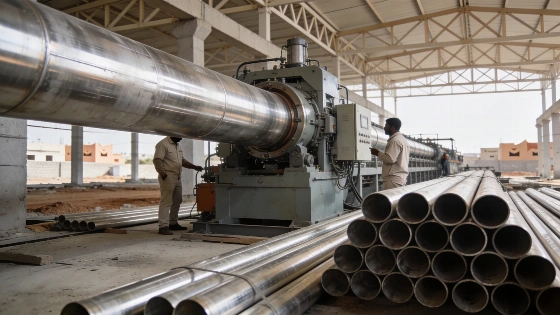
Froch says equipment installation is under way at its Morocco facility, with trial runs planned by the end of 2026 and production targeted for early 2027. The company has linked earnings growth to a new export-focused manufacturing base, but public disclosures do not independently verify the budget or timetable.
Equipment installation is under way at Froch Enterprise Co., Ltd.’s Morocco site after schedule adjustments, the company reports. Froch plans to start production in the first quarter of 2027 and expects the plant to serve European markets.
The facility is designed for annual capacity of 30,000 tons, with initial monthly output targeted at 2,000 tons. Both remain targets. The reported US$30 million budget and launch schedule come from the company; public disclosures do not independently verify them. The AMMC releases index contained no relevant Froch notice among the materials reviewed, though other disclosures may exist.
Froch linked improved first-half financial performance to nickel-supported product pricing. In August, it also reported higher pre-tax and after-tax profits, but the supplied figures do not quantify those gains. Market indicators were weaker by late September: Katadata Databoks put the three-month nickel forward contract at US$16,060 per ton on September 30, down 1.26% over the week and 5.05% from the start of the year.
FT Mercati reported a 2025 average official LME price of US$15,160 per ton. Citing the International Nickel Study Group, it also described an ongoing supply surplus since 2022. These figures provide market context, not a direct measure of Froch’s realised prices or margins.
Katadata identifies EV-battery demand and stainless-steel demand as basic nickel-market drivers in 2026, with Indonesian supply also in play. Separately, SMM reported that China’s #1 refined nickel averaged 125,700 yuan per ton on September 28, down 1,200 yuan from the previous day. Nickel prices so offer no unqualified source of continuing earnings support.
Industrial piping makes up 70% of Froch’s product composition. The products support factory infrastructure, including cleanrooms and pure-water systems, and demand tied to AI and semiconductor facility construction could support them. Metal.com has also linked Froch’s revenue backdrop to semiconductor construction demand, but provided no independent details about the Morocco project.
Froch says it chose to invest in Morocco in 2023 to diversify its production bases and target European customers. Its stated plan calls for market promotion in the fourth quarter of 2026, followed by trial runs by year-end; official production is scheduled for the first quarter of 2027. The company expects the plant to add to profit once operations stabilise; that remains a forecast.
The project adds to Morocco’s wider investment profile, discussed in this investment-climate report. The Moroccan news agency MAP’s coverage is one channel to monitor for regional reporting and public announcements, alongside regulatory disclosures. Neither general investment reporting nor Morocco’s investment profile independently verifies Froch’s stated budget, capacity or timetable.
Froch’s strategy links reported earnings support to a longer-term bet on overseas manufacturing. The next milestones are to complete equipment installation and begin trial operations, followed by evidence of stable commercial output. Until then, the plant’s capacity and profit contribution remain targets, not achieved results.







