
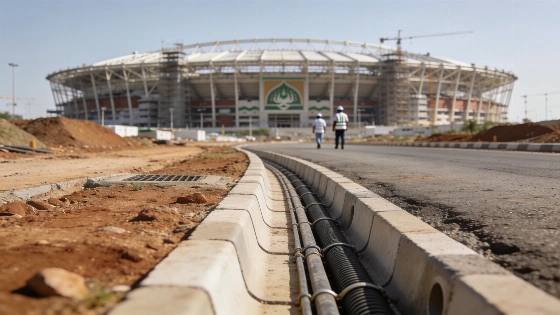
CMS-GTR has won an 18-month, MAD 2.7 billion contract for roads, utilities, drainage and security systems around the Grand Stade Hassan II in Benslimane. The work is separate from the stadium's main structure and must link up with transport projects planned for major events and the 2030 World Cup.
The work reaches beyond the stadium footprint. CMS-GTR must build access roads, utility links, drainage and security systems around the Grand Stade Hassan II site in Benslimane. The consortium's contract is worth MAD 2.7 billion.
The 18-month job covers the area around the venue, not its main structure. CMS-GTR's work must line up with that of contractors handling the roof, facade, electrical systems and internal utility networks. The planned capacity is 115,000 spectators, which would make the stadium one of the world's largest football venues. It has also been discussed internationally as a possible venue for the 2030 World Cup final. FIFA has not confirmed the match assignment.
Separate from the stadium contract are estimates for the wider project. Earlier public figures put its cost at MAD 5 billion. Later media reports cited a total above MAD 11 billion. A Casablanca-Settat Regional Investment Center presentation was also reported to retain the earlier estimate. These figures refer to the wider project, not the CMS-GTR award. The totals differ.
Public funding for the stadium project was approved in October 2023. Site preparation began about a year later, and regional reporting said that phase was complete by May 2025. Transport links have since become a larger part of the work. In September 2026, Moroccan coverage, including MAP reporting on national preparations, described construction advancing alongside access and rail projects serving the Grand Casablanca area.
CMS-GTR must build internal roads, entry and exit routes, service lanes, intersections, plazas and pedestrian areas. The layout is designed to keep spectator routes apart from operational and technical traffic. The job also includes ramps, retaining structures, walls, stairs and technical galleries for the site's networks. The split matters.
A separate Moroccan infrastructure project covers airport upgrades, as described in this earlier airport report. The stadium contract focuses on linking one large venue to its surrounding access and service systems.
Rail access is part of that network. Reports on the planned Grand Stade Hassan II station describe two tracks and two platforms for high-speed services during major events. The station is also planned to have five platforms and six tracks for suburban trains. That setup is meant to handle event crowds as well as regular commuters. It is part of the wider rail programme being advanced by Morocco's national operator, ONCF. Road and station work will need to operate as one access network.
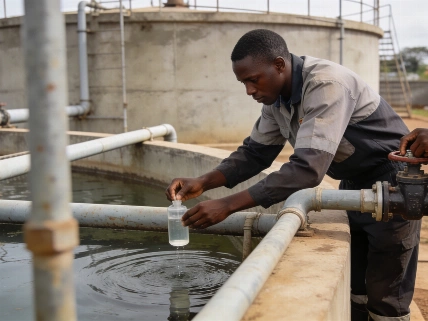
The contract also covers external connections for drinking water, electricity, telecommunications, fibre optics and internet. It includes high- and low-voltage networks. Drainage work covers rainwater and wastewater collection, retention, evacuation and treatment. Fences, gates, barriers and access-control points are intended to manage entry and keep user groups apart during major events.
Landscaping is included, along with irrigation, tree planting, surface finishes, signage and outdoor equipment. Before handover, the consortium must test, calibrate and commission the external systems.
Construction alone will not complete the job. The roads and utilities must work together at their connection points. The value of the award will depend on whether CMS-GTR delivers an operational site linked to rail and road access, not just a set of finished components.