
A 2026 U.S. investment-climate report points to Morocco's trade access, infrastructure and open financial system as draws for foreign capital. It also notes that the country has no screening process for investment in critical industries.
A free trade agreement signed in 2004 gives Morocco a direct trade link with the United States. The country is the only one in Africa with such an agreement. The 2026 U.S. report says bilateral goods trade has grown nearly eightfold since it took effect.
At the same time, Morocco has no screening process for investment in critical industries. These include telecommunications, defense, critical minerals and rare earths. That openness may lower barriers for investors, but the regulatory gap matters to companies looking at sensitive sectors.
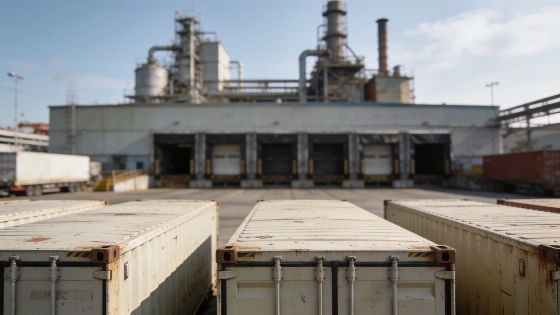
The report describes a strategy focused on export manufacturing and employment. It points to Morocco's location between Africa, Europe and the Middle East, along with opportunities in automotive and aeronautics, textiles, energy, pharmaceutical outsourcing and agribusiness. Free-trade agreements, political stability and modern infrastructure support that pitch. Morocco's state news agency MAP communicates the country's economic priorities. Investors also need to assess the rules and oversight regulators apply.
Morocco markets itself as a "gateway to Africa." Investors still need to assess access to each national market. The trade links are a draw.
Preparations to co-host the 2030 FIFA World Cup with Spain and Portugal accompany spending on roads, railways, airport expansion, stadiums and ports. Digital infrastructure is part of the push too. The report points to telecommunications networks, data centers, cloud services and wider ICT systems. These projects may support industrial exports and services. Their commercial impact will depend on delivery timelines, financing and demand.
The investment case also includes financial markets. Foreign investors face no restrictions on participation in the Casablanca Stock Exchange, which is regulated by the Moroccan Capital Market Authority. The U.S. report put its market capitalization at around $100 billion. That should not be read as a current benchmark. Local-market data put capitalization at about 1.05 trillion dirhams on 25 September 2026, with the MASI index at 19,124.18 points. The local estimate was also reported as roughly 61% of Morocco's GDP.
New listings have added to the market. Independent 2026 analysis counted 80 listed companies at the end of 2025, then 81 after T2S Group Holding's IPO in July 2026. It also counted 10 offerings from 2020 through July 2026, which raised about 11.45 billion dirhams. A Reuters company profile showed a much higher dollar-denominated capitalization estimate in September 2026. Currency conversion and methodology can produce materially different dollar figures. The dirham measure is the clearer local reference point.
Morocco has accepted the obligations of IMF Article VIII, sections 2(a), 3 and 4. The IMF country profile confirms that current international payments and transfers are not restricted under this framework. Bank Al-Maghrib's monetary-policy and exchange-rate framework forms part of the wider financial context. Reforms have also been associated with greater exchange-rate flexibility, Basel III implementation and financial inclusion. Moroccan banking groups operate across the continent alongside subsidiaries of foreign banks. Local and foreign investors generally face the same tax framework. Dividend and capital-gains treatment varies by investor and investment type.
Free zones offer tax breaks, subsidies and reduced customs duties to companies that export from Morocco. Casablanca Finance City offers incentives to Moroccan and foreign financial and nonfinancial firms that set up regional headquarters. Both receive the same tax benefits. An earlier battery investment report on planned production in Kenitra shows the kind of export-focused project Morocco wants to attract.
Morocco's offer rests on trade access, infrastructure spending, financial openness and investor incentives. The absence of screening in critical industries is another part of the picture. Investors must weigh those advantages against the regulatory gap and check current market data against local-currency measures. September figures for the Casablanca Stock Exchange appear in its Reuters market profile.