
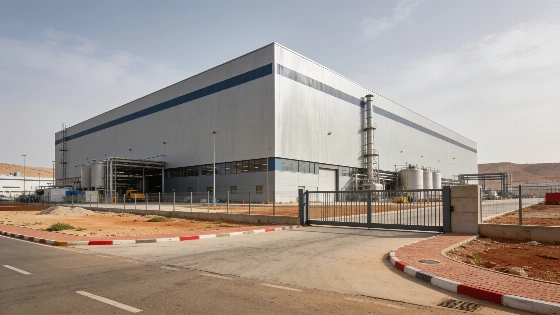
Gotion High-Tech and PowerCo plan to produce up to 100,000 tonnes of LFP cathode material a year in Kenitra. The €480 million project is part of a wider partnership with battery ventures in Spain and Slovakia.
Volkswagen Group announced an expanded partnership on 28 September 2026, covering three joint ventures in Valencia, Šurany and Kenitra. The Kenitra venture is a partnership between Gotion High-Tech and PowerCo, a Volkswagen Group company. Together, the projects link Moroccan production with industrial plans in Spain and Slovakia.
The Kenitra facility is planned to make lithium iron phosphate (LFP) cathode materials. It is designed to produce up to 100,000 tonnes a year, with an estimated investment of about €480 million, according to Volkswagen Group. These are targets, not current production figures.
Gotion will hold 51% of the Kenitra joint venture and PowerCo 49%. The companies will manage it together. Volkswagen said the partnership is intended to diversify supply and make critical-materials supply chains more resilient. Reuters reported that PowerCo expects to invest about €470 million by 2030 for 49% stakes in the Moroccan and Slovak ventures. That figure covers a wider investment framework, not just the Kenitra plant.
The package also includes Volkswagen's agreement to sell a 5.3% stake in Gotion, Reuters reported. The plans link battery-material production in Morocco with projects in Spain and Slovakia. No construction timetable or Kenitra production start date has been published.
The project follows an earlier financing step. In July 2026, the African Development Bank approved a €100 million loan for Gotion Power Morocco to support an integrated LFP battery project in the Rabat-Salé-Kenitra region. The bank described a phased plan, with an initial 10 GWh phase and eventual capacity of up to 100 GWh. That figure measures battery-project capacity, not the Kenitra plant's planned annual output of cathode material.
Kenitra is intended to supply a battery input to related European projects, not just serve as an automotive manufacturing location. An earlier assessment described Morocco's industrial base and infrastructure as potential links to European clean-technology supply chains.
Morocco's location and industrial platform appeal to companies looking for more varied supply chains. Delivery will depend on execution, financing and the growth of the wider battery ecosystem. The African Development Bank's loan is separate support for Gotion Power Morocco's integrated project. It is not part of the announced €480 million joint-venture plant investment.
The deal could give Morocco a role in electric mobility beyond vehicle assembly, including battery materials and technologies linked to transport decarbonisation. The next test is implementation. Until construction and production plans are confirmed, the investment and capacity remain announced targets, not operating supply.