
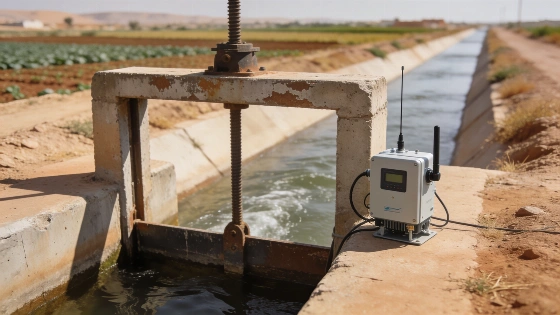
Rubicon Water has been chosen to supply canal-control technology for a proposed upgrade to Morocco's Béni Moussa irrigation scheme. Its proposed contribution is worth about A$12 million, but the award is not yet a signed contract and remains subject to a 15-day appeal period.
After administrative, technical and financial reviews, the Tadla Regional Agricultural Development Office (ORMVAT) selected a joint bid from Rubicon Water and Moroccan and Spanish partners. The contract has not been signed. Reuters reported the decision.
Rubicon's proposed equipment and software package is worth approximately A$12 million. Moroccan reporting puts the overall contract at about 300.75 million dirhams. The figures cover different parts of the deal: the Australian-dollar amount is Rubicon's portion, while the dirham figure refers to the broader contract.
The award faces a 15-day appeal period. Formal signing is still pending. Not a done deal.
An irrigation area with ageing controls
The project covers around 69,600 hectares in the Béni Moussa perimeter of the Tadla region. The canal-regulation system has operated since the 1950s. Around 27,000 hectares have already been converted, or are being converted, from traditional gravity irrigation to pressurised drip systems, according to Moroccan reporting.
The tender covers more than gates. Its requirements include hydromechanical equipment, automation, telecommunications, specialist software and remote operation. Rubicon says its proposed package includes its Total Channel Control system, automated canal gates, communications infrastructure and the NeuroFlo platform. NeuroFlo is designed to monitor water levels and flows in real time.
The proposed work concerns control of water moving through the main canals. It is separate from the conversion of fields to drip irrigation. The two systems operate at different points in water delivery. The award alone does not show how much water will ultimately be saved or when any benefits will be felt. That distinction matters.
Selection is not a signed contract
ORMVAT chose the joint bid after reviewing it on administrative, technical and financial grounds. That is a procurement milestone, not confirmation that equipment supply, installation or commissioning has begun. The next steps are the appeal period and, if the award stands, formal contract signing.
The scheme covers a large area, but selection does not mean work has started. The reported overall value is about 300.75 million dirhams, and Rubicon's proposed share is about A$12 million. Neither figure confirms that the project has entered the delivery phase. ORMVAT's decision applies to a defined canal-modernization procurement, not a completed upgrade across the full irrigation area.
Infrastructure projects in the region serve different purposes. Algeria's separate Annaba port expansion is linked to phosphate exports. The Béni Moussa proposal focuses on irrigation control and agricultural water distribution.
Rubicon says the project would be its largest contract in Europe, the Middle East and Africa if the contract is signed and the work is completed. For now, the next concrete step is procedural: the appeal period must end, followed by formal signing. The proposal targets infrastructure that dates to the 1950s. Delivery still depends on those steps.