
A European Commission assessment names Morocco's industrial base, port infrastructure and phosphate resources as potential links to European clean-technology supply chains. New AfDB support and planned investments add momentum, but announced funding is not the same as operating capacity.
In its assessment of MENA value chains, the European Commission identifies Morocco's industrial capabilities and location as potential assets for clean-technology manufacturing aimed at Europe and the Mediterranean.
The report points to existing industries, modern infrastructure and proximity to Europe. But it describes potential, not large-scale clean-technology production already under way. Potential is not production. Projects still need financing, permits and construction before factories can begin work.
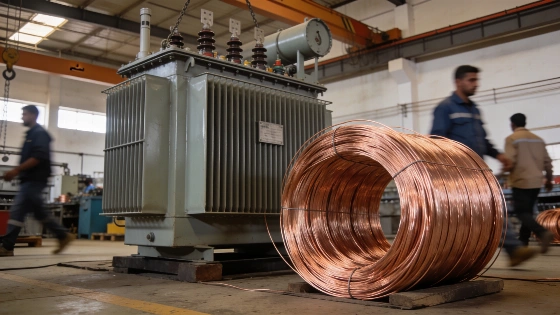
Morocco has established automotive, aerospace and electrical sectors. Its companies also have expertise in transformers, cables, electrical equipment and solar systems. The battery and electric-mobility value chain is developing, too. That gives the country an industrial base for possible growth in clean-tech production.
Phosphate reserves could also matter. The Commission report points to their possible use in making materials for lithium iron phosphate (LFP) batteries. Green hydrogen and ammonia investments could open new ways to connect Morocco's energy sector with Europe. Those remain prospects, not confirmed outcomes.
Recent financing shows the scale of the plans, but it does not show that projects are operating. The African Development Bank (AfDB) approved a $20 million package of four grants for green hydrogen and derivatives projects in Egypt, Morocco, Namibia and South Africa. The Moroccan Guelmim Green Hydrogen Valley project is set to receive $5.28 million. Renewable Watch reports that Nareva Holding sponsors the project. Funding is not output.
The four AfDB-supported projects are collectively associated with an estimated $23 billion in investment, 20 GW of solar and wind generation, 7 GW of electrolyser capacity and 2,950 MWh of battery storage, according to pv magazine Global. These figures cover the whole portfolio, not Morocco alone. Separately, media reports in 2025 said investors had been selected for six green hydrogen projects in southern Morocco. The projects were valued at 319 billion dirhams, about $33.3 billion. They involved more than 10 GW of renewable generation. Reported first phases were expected between 2029 and 2031. Those dates are projections, not completed milestones.
Battery manufacturing is a separate investment. In July 2026, the AfDB approved a €100 million loan for Gotion Power Morocco to build an integrated LFP battery plant in the Rabat-Salé-Kénitra Free Trade Zone. The plant is planned to cover production from cathode to cell, as Renewable Watch reported. The loan moves the project into an industrial funding phase. It does not establish that the plant is producing cells.
Tanger Med connects Morocco's industrial platform with major international markets, making the country more attractive to foreign investors. Clean-technology supply chains need factories, but they also need routes to move equipment and materials across borders. Ports matter.
Morocco's wider industrial plans also include digital infrastructure, such as the planned Nexus AI Factory near Casablanca. It is a separate project. It shows the range of developments tied to the country's investment proposition.
For updates on project stages, official communications from Morocco's Ministry of Energy Transition and Sustainable Development and the state news agency MAP news agency are important primary references. The Commission's assessment points to a credible opening for Morocco in the Mediterranean clean-tech market, not a guaranteed lead. The country has an industrial base, phosphate resources and port access. The test is whether investment turns those assets into sustained manufacturing capacity for the technologies Europe needs in its energy transition.