
NVIDIA has confirmed the planned Nexus AI Factory in Nouaceur, near Casablanca, with capacity of up to 500MW. The $1.2 billion initial budget is an estimate for the wider consortium, not a disclosed NVIDIA investment; Morocco is also part of a separate Cassava-led compute programme.
The planned Nexus AI Factory near Casablanca could have capacity of up to 500MW. That is nearly three times the capacity approved for Cape Town in July and more than the roughly 409MW of operational data-centre capacity across Africa cited in project coverage. On 21 September 2026, NVIDIA confirmed the Nouaceur location and Morocco's role in the initiative. The project was first announced at GITEX Africa in Marrakesh in April 2026. The September post confirmed the location and partnership.
Nexus is one of two African compute initiatives involving Morocco. The other is a separate rollout led by Cassava Technologies, which plans to add capacity in several African markets. Two separate projects.
Nexus is planned to use NVIDIA Blackwell accelerators and renewable electricity supplied by TAQA Morocco. NVIDIA puts the consortium's initial overall budget at $1.2 billion. That is an estimate, not a disclosed NVIDIA investment. The partners have not published a funding breakdown. Named Moroccan public-sector partners include the Ministry of Digital Transition, the ministry responsible for investment, and the Moroccan Agency for Investment and Export Development, known as AMDIE.
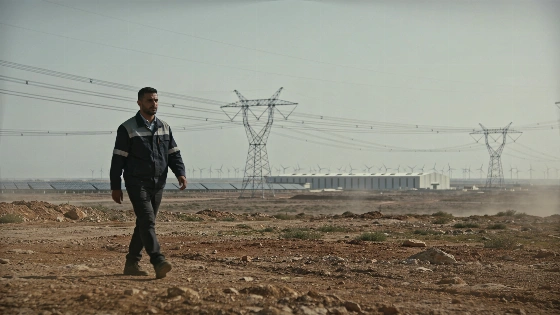
Power supply will be central to the plan. A facility at this scale will need reliable electricity as well as computing equipment and capital. The plan names TAQA Morocco as the renewable power supplier. Energy infrastructure is part of the project's development, not a side issue.
Morocco is also pairing digital investment with renewable-energy development. That includes a separate 500MW renewable-powered facility planned for Dakhla. Development funding has also backed the country's broader renewable push, as reported in regional hydrogen financing. These are separate initiatives. Their timelines and power arrangements need to be assessed project by project.
The other compute programme is led by Cassava Technologies, which NVIDIA identifies as its first African cloud partner. After an initial deployment in South Africa, Cassava plans to add computing capacity in Morocco, Egypt, Kenya and Nigeria. NVIDIA puts the programme's total value at $720 million. It has not disclosed a Moroccan site, a capacity allocation or a commissioning timetable. The $720 million figure is for the programme, not a Morocco-specific investment.
Those details matter. The size of the infrastructure alone does not show whether local researchers, developers and companies will be able to use it. Neither project has disclosed how domestic users will access its computing capacity. Morocco's MAP news agency provides a regional public-information channel. The investment and capacity figures here come from NVIDIA, not a published government financing breakdown.
Other African projects show the stakes around power supply. A planned Microsoft and G42 facility in Kenya faced delays after its power requirement was revised to 1,000MW, against a national grid of roughly 3,000MW. In Cape Town, a legal challenge over data centres' competition for water and electricity is underway. Campaigners are seeking a national moratorium. Cassava executive Angus Hay told Enlit Africa this year that renewable energy is the new oil for African AI infrastructure.
Morocco's AI Made in Morocco initiative targets a 100 billion dirham contribution to GDP and 50,000 AI jobs by 2030. The country has also partnered with Mistral AI on a multilingual lab and signed a joint commission with India on language AI for Darija and Amazigh. It is also building the Al Jazari Institute network. These ambitions provide policy context, but they do not set the delivery schedule or public-access arrangements for Nexus and Cassava.
The next disclosures need to cover confirmed sites, rollout schedules, governance and access rules. Morocco has linked renewable power with digital investment. The plans are substantial. But until partners say who can use the computing capacity and on what terms, these remain planned facilities. They do not yet prove that sovereign AI capacity is available to the communities the projects are meant to serve.