
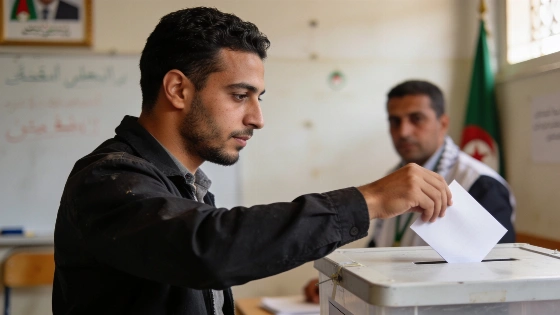
Morocco's PJD won 54 seats, up from 13, after campaigning against renewed ties with Israel. The Interior Ministry confirmed the result, but the king retains decisive authority over foreign policy.
Morocco's Justice and Development Party (PJD) won 54 seats in the Sept. 23, 2026 election, up from 13. The Authenticity and Modernity Party (PAM) finished first with 97. On Sept. 25, the Moroccan Interior Ministry confirmed the final results matched the provisional tally Interior Minister Abdelouafi Laftit had announced in Rabat the day before.
The National Rally of Independents (RNI) won 66 seats, Istiqlal took 65 and the Popular Movement won 29. PAM, RNI and Istiqlal hold 228 of the lower house's 395 seats together. That gives them an absolute majority, but not a single-party mandate. MAP's election coverage reflected the official result. The close standings among the leading parties leave coalition bargaining at the center of parliament.
Turnout was 38.02%, down from 50% in the 2021 parliamentary election. The PJD has a larger parliamentary platform, but the turnout figures show that participation remains a significant challenge. Reuters reported that the return of former prime minister and party leader Abdelilah Benkirane helped the party's rebound. The results do not show that opposition to Israel alone drove its gains.
The PJD has a louder platform now. It does not control diplomacy. Foreign policy remains under the king's decisive authority. The party can make relations with Israel an election issue, but cannot reverse them on its own.
The PJD campaigned against the ties as Rabat and Jerusalem maintained their rapprochement. That message gave the party a way to bring varied grievances together and put its rivals on the defensive. The result is not a referendum on one foreign-policy question. Turnout was low, and voters faced a range of issues.
The gap between party rhetoric and state policy matters. It also provides context for reporting on Morocco's Gaza deployment. That is a separate development. It shows why an election message should not be mistaken for a change in who controls diplomacy.
The PJD is rooted in Moroccan political Islam, with an ideological matrix in the Movement for Oneness and Reform. Its historical and intellectual proximity to the Muslim Brotherhood does not make it an Egyptian branch. The party has pursued electoral politics and recognized the monarchy's religious legitimacy. It distanced itself from the Brotherhood from the mid-2010s.
The Palestinian cause carries different political meanings across the wider region. It does not amount to a shared Maghreb or MENA foreign-policy program. In Morocco, the election shows how opposition to normalization can serve domestic political competition even as the state retains control of diplomacy. The distinction matters. Parties, governments and non-state movements have very different powers and strategic aims.
In Iran, hostility toward Israel has been part of the Islamic Republic's identity since 1979. Tehran uses support for Palestinians to claim a leadership role in the Muslim world, build common ground with Arab and Sunni movements, and oppose regional normalization with Israel. Ideology shapes the policy. Security needs and power calculations also influence Iranian decisions.
For the Houthis, confrontation has brought visibility beyond Yemen. Since the Gaza war began, the movement led by Abdel-Malik al-Houthi has launched missiles and drones toward Israel and attacked ships in the Red Sea in the name of Palestinian solidarity. At home, the cause offers a rallying point in a divided country. It also lets the Houthis accuse domestic opponents of failing Gaza. Abroad, it has raised the movement's profile. Attacks and disruption to maritime commerce carry economic costs for shipping and risks for regional trade.
The PJD's 54 seats mark a parliamentary recovery after its 2021 collapse, but they do not overturn the governing balance. PAM, the RNI and Istiqlal hold 228 of 395 seats together. The election shifts the parties' relative standing. These figures do not compel a diplomatic reversal. The three parties' clear parliamentary majority and low turnout also show the difference between legislative arithmetic and broad public participation.
Opposition to Israel is a shared political language, not proof of a shared strategy. Tehran uses it to anchor regional influence. The Houthis use it to expand their stature. Moroccan Islamists use it to contest domestic politics. Those uses are not interchangeable. In Morocco, an election message can pressure rivals, but foreign policy remains with the king.