Morocco has broken ranks by sending senior officers and police to the International Stabilization Force in Gaza. This makes it the first Arab state to join the US-backed mission to demilitarize and rebuild the enclave after years of conflict.
Morocco has shaken up the region by sending personnel to the International Stabilization Force (ISF) in Gaza. Rabat is now the first Arab state to join the US-backed multinational mission. Foreign Minister Nasser Bourita made the announcement at the United Nations General Assembly in New York. Morocco's Ministry of Foreign Affairs, as reported by the Maghreb Arab Press (MAP), said this move fits with the country's long-standing support for Palestinian rights and regional stability.
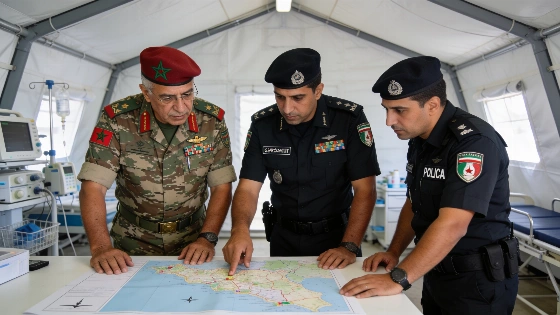
This is not just another cautious gesture. Morocco's decision is based on a formal agreement signed in Rabat on July 15, 2026. The deal spells out the legal and operational rules for the deployment. King Mohammed VI directed the process, bringing together the Foreign and Defence Ministers and the Board of Peace's envoy for Gaza, Nikolay Mladenov. Morocco is not sending combat troops. Instead, it is sending senior military officers, gendarmerie, and specialized police to the ISF's joint command. Their job is to focus on law enforcement and help structure the force. The goal is to move Gaza from open conflict to managed administration. The Moroccan government says this approach is meant to support a stable transition and lower the risk of more violence.
Moroccan strategy blends security and humanitarian action
Morocco's plan goes beyond sending uniformed officers. The deployment includes a military field hospital. This is a direct answer to the collapse of Gaza's healthcare system. The hospital is meant to give immediate medical help and shows the humanitarian side of Morocco's involvement. The Royal Armed Forces have confirmed that the mission covers both security and civilian stabilization. Morocco has also sent about 40 tons of food and medical supplies to northern Gaza by land. This shows a real commitment to humanitarian aid, as reported by Canal 212 and backed up by regional diplomatic statements.
Morocco is also pushing a civilian-led deradicalization program. The plan uses Morocco's own experience in counterterrorism and social education. It aims to fight hate speech and encourage tolerance in Gaza during the rebuilding phase. Moroccan officials will train local police, building a vetted force that can take over internal security and reduce the need for foreign oversight. The Ministry of Interior says this training will be done with international partners and watched by the United Nations Economic Commission for Africa (UNECA) to make sure it meets international standards.
International force faces regional skepticism
The ISF is a key part of the US administration's peace plan for Gaza. It is supposed to oversee demilitarization and coordinate aid. But the mission has struggled to get broad support. Most Arab and Islamic states have refused to send troops, worried about the political risks and dangers on the ground. Indonesia, for example, first promised troops but then paused its commitment, waiting for more diplomatic clarity. Kosovo's offer of 20 soldiers is far less than what Washington wants. Morocco's move gives the ISF a much-needed regional boost and could change the thinking of other hesitant states. The Algerian Press Service (APS) notes that Algeria and Tunisia still push for a strictly humanitarian approach. This shows how Maghreb countries are taking different paths on regional interventions.
Morocco's decision comes as other regional players rethink their positions. The country's normalization deal with Israel has already changed its diplomatic standing. This deployment lets Rabat assert itself in the eastern Mediterranean and strengthens its role as a security partner for Washington. But the situation in Gaza is still tough. The ISF will have to deal with big logistical and security problems. Enforcing a weapons-free zone and managing aid will be hard from the start. Ongoing analysis by Al-Monitor points out that the "Board of Peace" plan is still being put in place. There are still open questions, like how to disarm Hamas and when Israeli forces will pull back.
As the United Nations General Assembly continues, all eyes are on how Moroccan officers fit into the ISF command. The success of the deradicalization program and police training will depend on how locals respond and how the political climate shifts. Algeria's recent diplomatic moves on regional security, as reported earlier, show the different approaches Maghreb states are taking to high-stakes interventions. More updates on Morocco's deployment and regional reactions are available through the official MAP news portal.
Morocco's move to join the Gaza stabilization mission is more than just a symbol. By combining security skills, humanitarian aid, and civilian deradicalization, Rabat is stepping up to shape what comes next in Gaza. This strengthens Morocco's ties with Washington and sets a new example for Arab involvement in Gaza's rebuilding. Whether other regional powers follow or stay out remains to be seen. For now, Morocco has taken the lead where others have held back.