Algeria has begun construction of the Annaba port mining terminal, the final link in its national phosphate project. The expansion aims to speed up phosphate exports and connect mining, processing and shipping across the country.
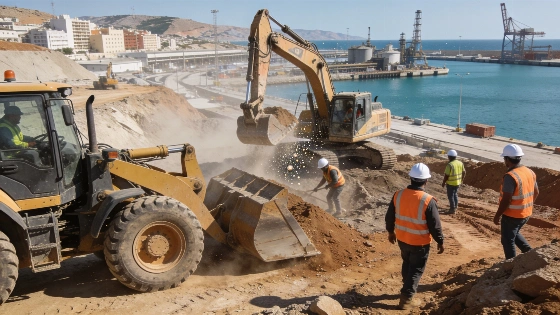
Algeria broke ground on the Annaba port mining terminal on 23 September 2026, with Minister of Energy and Hydrocarbons Mohamed Arkab overseeing the launch. The terminal is the final link in the country’s phosphate plan, connecting extraction, processing and shipping to boost exports. Radio Algérie reported the launch, which the Algerian Press Service (APS) also confirmed.
The Annaba port expansion links the Bled El Hadba mine at Bir El Ater and the Oued Kebrit chemical plant in Souk Ahras to world markets. It aims to move enriched phosphate, fertilizers and related goods from mine to ship more quickly, easing bottlenecks that have slowed Algeria’s exports. The project covers four wilayas, Annaba, Souk Ahras, Tébessa and Bir El Ater, and is intended to create a single industrial and logistics zone from extraction to shipping, APS and regional economic reports say.
Government pushes for fast progress and teamwork
Minister Mohamed Arkab led the launch in Annaba, joined by Abdelkader Djellaoui, Minister of Public Works and Basic Infrastructure, and Mourad Hanifi, Minister of Mines and Mining Industries. Annaba Governor Abdelkrim Lamouri and Sonatrach Group CEO Nourredine Daoudi were also present. Arkab called for close coordination between sectors and urged companies on site to strengthen monitoring and resolve problems quickly to keep the project on track. China Harbour Engineering Company (CHEC) is the port’s basic EPC contractor, information from MEED and regional infrastructure trackers.
Officials reviewed the port’s technical plans and presented the terminal as part of a wider industrial and logistics plan, not a standalone investment. The facility will handle local and international shipments, bolstering Algeria’s position in global phosphate and fertilizer markets. Sector reports say the port extension will add about 1,600 meters of quay, a depth of around 16 meters and a platform of roughly 82 hectares, with direct rail links to the mines. Once completed, the terminal is expected to increase export capacity by 8-10 million tonnes per year. Completion is targeted for March 2027, information from recent interviews with Serport executives and coverage by Jeune Indépendant.
Strategic context and regional rivalry
The Annaba terminal is taking shape as regional phosphate strategies draw attention. Algeria is advancing its integrated plan, while Morocco has faced delays in its own infrastructure projects, as reported earlier. That contrast reflects Algeria’s effort to close logistics gaps and capture more value from its minerals. Tunis Afrique Presse (TAP) and the United Nations Economic Commission for Africa (UNECA) have both pointed to growing competition among Maghreb countries for a larger share of the global fertilizer market.
By linking mines, chemical plants, railways and port facilities, Algeria is pursuing a model designed to cut waste and increase export capacity. The government’s push for fast timelines and close oversight reflects the risk that delays or poor coordination could jeopardize the plan. The Bled El Hadba-Oued Kebrit-Annaba corridor is now viewed as a connected value chain. Reports from Algeria News and Tunisia Numerique say raw material is moving smoothly from the mine through processing to export.
Making the Annaba port terminal the final link in Algeria’s phosphate logistics chain is part of the country’s effort to compete more strongly in global markets. If construction proceeds as planned, Algeria could shift from selling raw materials to exporting more finished products. The project’s pace and execution will show whether the country can meet its industrial policy goals, according to recent statements from the Ministry of Energy and Hydrocarbons and APS coverage.