Fiat's locally made special edition arrives as Algeria seeks a deeper manufacturing base. A failed Renault Trucks restart at Meftah shows how licensing and shifting import rules continue to complicate investment.
Renault Trucks abandoned plans to restart its Meftah assembly facility after failing to secure authorisation from Algeria's Ministry of Industry. Fiat's locally manufactured limited-edition vehicle enters a market where manufacturing ambitions have run into regulatory hurdles.
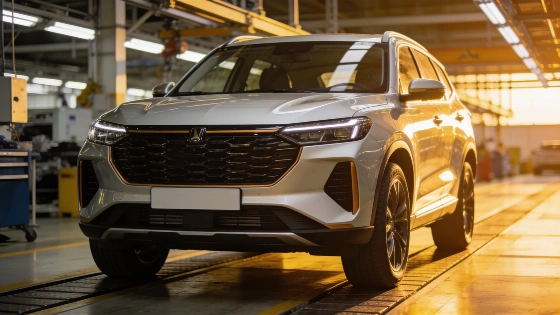
Fiat, part of the Stellantis Group, says it designed the special edition with the preferences of a typical Algerian family in mind. The Doblò Panorama Street is assembled at the Tafraoui plant in Oran province and joins the existing Cult and Club versions. Its reported distinguishing features are a black exterior and rear spoiler, with added equipment and Street badging.
The Street edition starts at 3,869,000 Algerian dinars, or about US$29,800, according to automotive coverage. Fiat is offering it to customers already registered for the standard Doblò Panorama, with dealers processing the existing list in chronological order. Motors Actu reports that Tafraoui has moved to completely knocked-down (CKD) assembly and that the Doblò is the third Fiat model assembled locally; the site also produces the Grande Panda in CKD.
Fiat's manufacturing programme follows a 2022 framework agreement with Algerian authorities aimed at local vehicle production and development of the automotive sector, disclosed in the Dutch regulator's register. Motors Actu has reported that Tafraoui's cumulative output has passed 50,000 vehicles.
Two very different production outcomes
The Meftah facility in Blida province was operated through a partnership involving Sweden's Volvo Group and Algeria's BSF Souakri Group. It began assembling Renault Trucks vehicles in 2019, with estimated annual capacity of about 2,000 trucks. Operations were suspended in 2020 after the government halted preferential imports of vehicle assembly kits.
The plant had capacity for about 2,000 trucks a year.
Algeria's automobile-sector framework, Regulation 22-383, was issued in November 2022. The U.S. Department of State says automotive and industrial activity, including commercial operations, requires prior authorisation from the Ministry of Industry. Operating authorisations are granted for five years and are renewable. Local manufacturers must reach at least 10% domestic content by the end of their second authorisation year and 30% by the end of the fifth, under the framework described in the department's 2026 investment climate statement.
The failed restart shows the operational consequences of regulatory change. Licensing and import rules have complicated projects, while industrial approvals have also proved difficult to secure. Fiat's production activity offers a contrasting example of an international manufacturer making vehicles in Algeria.
The push for domestic production extends beyond cars. An earlier local dairy build-out also aimed to increase domestic output and reduce reliance on imported milk powder.
Market demand and the investment test
Algeria offers manufacturers access to a sizeable consumer market. Expanding local sourcing and developing suppliers could deepen the industrial base, but regulatory stability and timely approvals remain important considerations for companies weighing long-term investment.
Vehicle ownership figures help explain the market's appeal. The International Organization of Motor Vehicle Manufacturers (OICA) ranks Libya first in Africa at approximately 490 vehicles per 1,000 inhabitants. South Africa is second. Algeria follows with 144 vehicles per 1,000 people.