
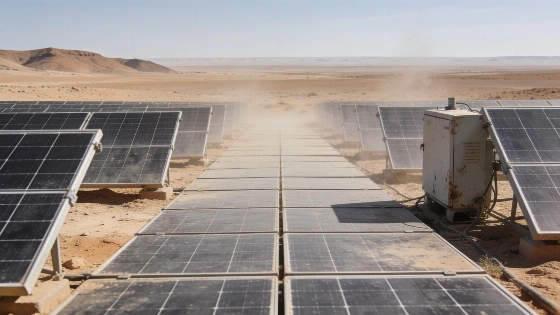
A 3,000 to 3,300-kilometre pipeline is proposed to move renewable hydrogen from Algeria and Tunisia into Europe. A five-country declaration advanced the plan in October 2026, but costs and investment remain unresolved.
The proposed pipeline has not been built. Its planned 3,000 to 3,300-kilometre route would connect production areas in Algeria and Tunisia with Italy, then continue through Austria to Germany.
On October 1, 2026, Algeria and Tunisia signed the Algiers Ministerial Declaration alongside Italy, Austria and Germany. The declaration provides for a dedicated project secretariat, with technical support from the United Nations Industrial Development Organization, or UNIDO. It follows a political-intentions declaration signed in Rome in January 2025. Coordination has advanced, but there is no final investment decision.
Backers are targeting annual transport capacity of more than 4 million tonnes of renewable hydrogen. About 65% of the route is expected to use converted existing infrastructure. The proposed capacity has been compared with around 10% of projected European clean-hydrogen demand in 2040. That is a project target, not evidence of confirmed production or deliveries. The original plan points to possible operations in the early 2030s, subject to development and financing.
Algeria also announced the ALTEH2A study, short for Algeria to Europe Hydrogen Alliance. Initial results are expected in 2027. The study will assess potential production sites and project costs. It will also examine transport options, infrastructure needs and European market prospects, leaving the business model and competitiveness unresolved for now.
Coverage from the Algerian Press Service and Tunisia's Tunis Afrique Presse will help track how the two North African partners report later milestones.
The corridor could give Algeria a direct route into Europe's emerging hydrogen market. The country already has energy links with Europe, while some existing infrastructure may be repurposed for hydrogen. A related corridor report has tracked the planning stage; available information describes no commercial deliveries.
Algeria's case rests partly on its renewable-energy potential. Estimates cited for the country put annual sunshine at around 3,500 hours and potential wind generation capacity at about 35,000 megawatts. Its Mediterranean coastline is close to southern Europe. Those estimates do not show how much power can be generated reliably or affordably, or how much would be near suitable water and transport infrastructure.
Green hydrogen is made by using renewable electricity to split water into hydrogen and oxygen through electrolysis. Competitive output will depend on the cost and reliability of renewable power. Water supply and electrolyser investment matter too, alongside grid connections and transport. In arid production regions, water infrastructure may add cost. Reusing pipelines could reduce some construction needs, but technical assessment and permitting would still be required, along with substantial long-term financing.
The European Commission has included components of the corridor in its second list of Projects of Common Interest and Projects of Mutual Interest. The designation may support coordinated permitting and eligibility to seek Connecting Europe Facility funding. It guarantees neither a grant nor an investment decision. For Algeria and Tunisia, the project will test whether cross-border planning can connect renewable resources to export infrastructure that meets European cost and supply expectations.
The ALTEH2A study is set to assess production sites, costs and the prospects for selling hydrogen in Europe, with initial results expected in 2027.