Ministers from Algeria, Tunisia, Italy, Austria and Germany signed the Algiers declaration on October 1, 2026. The corridor remains at the planning and feasibility stage, with no commercial deliveries underway.
Current reporting puts the proposed SoutH2 route at roughly 3,000-3,300 kilometres long. It is intended to carry up to four million tonnes of green or renewable hydrogen a year from Algeria to Europe. Algeria, Tunisia, Italy, Austria and Germany signed the Algiers Ministerial Declaration on October 1, 2026.
The proposed volume has been estimated at about 10% of Europe's projected green-hydrogen demand in 2040. It is a target, not a confirmed supply commitment. The declaration marks political and institutional progress, but hydrogen production and transport have not begun. No deliveries have begun.
Reporting on the declaration says it provides for a dedicated technical secretariat, with support from the United Nations Industrial Development Organization (UNIDO). The next stage is expected to include technical and economic work. That work will assess the route, infrastructure needs and commercial prospects.
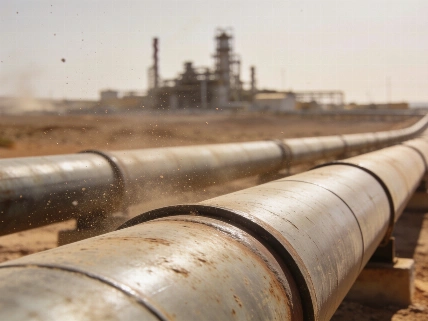
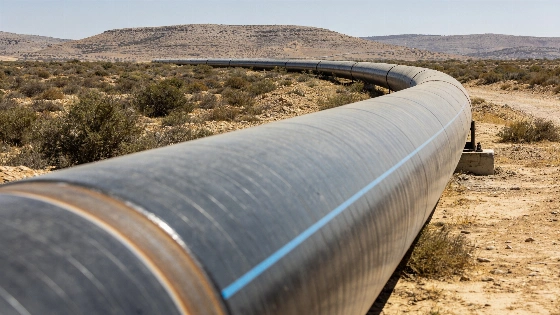
The corridor is expected to use some existing natural-gas infrastructure rather than rely entirely on a new pipeline. Reuse could cut costs and shorten development time. Its suitability for hydrogen transport remains a technical assumption for feasibility studies to test. Not proven yet.
The studies build on work started in Oran in October 2024. At the time, Algeria's Sonatrach and Sonelgaz signed a memorandum of understanding with Germany's VNG, Italy's Snam and SeaCorridor, and Austria's VERBUND Green Hydrogen. The findings will help determine whether production, converted infrastructure, financing and buyers can support the proposed capacity.
An earlier project brief also said the four-million-tonne target depends on technical studies, infrastructure conversion, project economics and demand. The new declaration adds a formal ministerial step. It does not resolve those practical questions or set a confirmed investment volume.
The five-country process follows a first ministerial meeting in Rome in January 2025. The countries reportedly signed a declaration of political intent there and agreed to strengthen cooperation through a working group. After the October 2026 meeting in Algiers, President Abdelmadjid Tebboune received the energy ministers of Tunisia, Italy, Austria and Germany.
For Algeria, the project could eventually connect its renewable-energy ambitions with its established role as an energy supplier to European markets. Progress will depend on follow-up by the Algerian energy ministry and continued coordination with partner governments. The Algerian Press Service and Tunisia's TAP are among the national information channels covering developments in the cross-border initiative.
Algeria's wider hydrogen programme is also under development. Regional reporting says feasibility work on the related ALTEH2A initiative is underway, with its first results expected in 2027. The timetable separates plans for a future hydrogen export cluster from infrastructure already in operation.
SoutH2 has advanced from the political intent announced in Rome to a five-country declaration in Algiers. Its viability will depend on technical and economic assessments, the feasibility of pipeline reuse, investment and customers. It remains a planning framework, not an operating hydrogen corridor.