
The World Bank now sees Morocco growing 4.4% in 2026, against a projected 2.1% contraction across MENAAP. Better farm conditions and public investment support the upgrade, while energy costs and a wider current-account deficit threaten the outlook.
The regional forecast turns on a conflict that began in February 2026. In its 6 October 2026 update, the World Bank raised its 2026 growth projection for Morocco to 4.4%, from 4.1%. Its forecast for 2027 remains 4.0%, according to Morocco World News.
The regional split puts Morocco's revised outlook in a different light. Conflict and trade disruption weigh on the wider MENAAP forecast, while conditions at home have improved.
Rainfall has improved, lifting prospects for agricultural production. Tourism remains active. Exports and public investment add further support. Morocco's national news agency, Maghreb Arab Press, known as MAP, is one channel for country-level reporting. The World Bank forecast offers a comparable regional macroeconomic assessment.
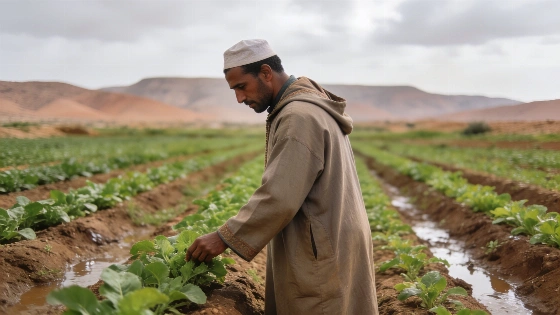
Better farm conditions matter beyond the fields. Stronger production can support rural incomes and household consumption after drought and weak harvests weighed on growth in previous years. Tourism and government-led investment add demand. Exports help sustain activity across the wider economy.
The upgrade does not remove the risks. The World Bank expects growth to moderate as the boost from stronger agricultural performance fades. Higher energy costs could raise expenses for businesses and households. Inflation is projected at 1.2% in 2026 and 1.8% in 2027, compared with 0.8% in 2025.
The World Bank projects MENAAP output will contract by 2.1% in 2026, after growing 3.3% in 2025. Conflict-related disruption has interrupted trade routes. Sharply higher energy costs are also weighing on activity.
That regional contraction masks a wide divide. Economies of oil-importing countries are projected to grow 4.3% in 2026, up from 3.9% in 2025. GCC economies, by contrast, are expected to contract by an average of 4.3%. For North African economies such as Morocco, the distinction matters: oil importers face different exposures from Gulf hydrocarbon exporters.
Shipping disruption through the Strait of Hormuz has particular consequences for Gulf oil and gas exporters. It limits hydrocarbon exports and pushes up energy costs. In import-dependent economies, higher energy prices can instead inflate import bills and business expenses. The World Bank's regional analysis points to distinct transmission channels across MENAAP.
Morocco's public finances are projected to remain broadly stable. The fiscal deficit is forecast at 3.5% of GDP in 2026 and 3.3% in 2027. The external balance is less comfortable: the current-account deficit is expected to widen from 2.1% of GDP in 2025 to 3.6% in 2026, then narrow to 2.4% in 2027. Higher import costs and stronger domestic demand are expected to weigh on the balance.
Household demand is part of the growth picture, but its resilience is not guaranteed. Maghreb Insider has tracked the strain of public-sector debt burdens. Stronger national output does not automatically mean looser household finances. Regional comparisons from the UN Economic Commission for Africa, or UNECA, can complement country forecasts; household conditions still need separate scrutiny.
The World Bank says MENAAP growth could reach 7.8% in 2027, excluding Iran, if the conflict ends by late 2026. The projected rebound would depend chiefly on the resumption of hydrocarbon production and exports. That would mark a recovery from disrupted activity, not necessarily a lasting productivity gain.
For Morocco, 4.4% would be a strong near-term result, but it does not establish durable growth. Better rainfall, tourism and public investment have built momentum. Fading agricultural gains, energy costs and a wider current-account deficit expose its limits. Morocco enters 2026 with a stronger cushion than much of the region; lasting progress will depend on productivity rather than another temporary rebound.
Technology is one possible longer-term lever. The World Bank estimates AI could raise productivity across MENAAP. Its figures put fewer than 10% of jobs at high risk of near-term automation, while 13% to 20% could benefit significantly from tools that assist workers. For Morocco, the practical test is whether investment in digital infrastructure and skills can make those tools useful in agriculture and tourism. Their reach into manufacturing will matter too, as will adoption across exports and infrastructure.