Sebha plans to bring back refuelling barcodes amid reported shortages. Brega says supplies are available and deliveries continue, while local officials say the south went three days without shipments.
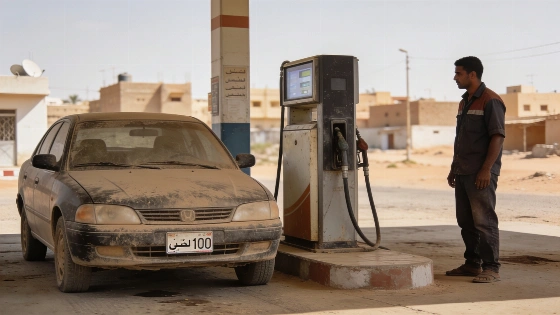
At a Sebha filling station, a barcode can control who gets fuel. It cannot make a tanker arrive.
Sebha plans to restore its fuel barcode system next week as local officials report worsening shortages after three consecutive days without deliveries to southern Libya.
Major General Jamal Al-Omami, head of Sebha's City Reorganization Committee, said no shipments reached the south on Friday, October 9, 2026. He accused Brega Oil Marketing Company of failing to meet its obligations to support the region and deliver its allocated share.
Brega gave a different account the day before. On October 8, company spokesperson Ahmed al-Maslati said fuel was available and supplies were continuing. He said Sebha and nearby areas were served according to operational quotas and the movement of tanker trucks. His statement, carried by a report on Brega's statement, predates the reported October 9 interruption. The accounts have not been independently reconciled, leaving the extent and timing of any supply gap unresolved.
Al-Omami named the Zawia Oil Refinery as a usual source for the south. He also cited depots in Tripoli and Misrata, as well as Marsa Brega. The reported disruption has sharpened a longstanding grievance among southern residents: they believe coastal cities get priority, along with authorities in Tripoli and Benghazi. If the interruption is confirmed, the immediate problem is physical delivery as well as distribution rules.
Sebha Municipality says the unique refuelling barcode system will resume next week in response to citizens' requests. It is meant to organise distribution and ease congestion. The municipality also says it will help fuel reach eligible motorists. Officials cancelled the system in September after objections that it added bureaucracy and fees without ending long waits.
Queues during the summer reportedly stretched up to 5km. Drivers waited as long as four days, even with barcodes in place. Registration cost LD 20; replacing a lost barcode cost LD 10. Critics questioned how motorists obtained a code and proved vehicle ownership. They also asked why the south had to use a system not imposed elsewhere in Libya.
Some residents blame persistent shortages on fuel smuggling. They say smugglers opposed controls requiring legal vehicle documentation. Libya's subsidised pump price is reported at LD 0.15 per litre, a large gap that can encourage resale and cross-border diversion. Reports cite Tunisia and Niger as destinations, along with Chad and Sudan. A recent report said authorities seized 6,000 litres on the road between Jalu and Awjila. Smuggling is one factor cited in the debate; it does not establish what caused the reported interruption to Sebha's deliveries.
The supply dispute also has a financing dimension. In a statement reported by the Libyan News Agency on October 5, the National Oil Corporation said domestic petroleum-product supplies are financed through letters of credit at the Libyan Foreign Bank, using oil revenues. The NOC said the barter arrangement had been suspended since March 2025.
The NOC reported that fuel-supplier letters of credit were valued at $917 million in April 2026, compared with $586 million a year earlier. It attributed the $331 million increase to higher world fuel prices.
Libya's refining sector adds another constraint. Industry reporting puts the combined design capacity of the country's five main refineries at about 380,000 barrels per day. Actual processing is roughly 180,000 barrels per day amid maintenance problems and conflict-related damage.
A planned refinery at Ubari is designed for 30,000 barrels per day, with the aim of reducing the south's dependence on coastal supplies. Bids for its main EPC contract, reportedly worth more than $600 million, are under technical evaluation. Construction is expected to take about 50 months; the refinery is not yet an operating source of fuel.
Libya has also discussed a nationwide digital fuel card that would allocate a monthly subsidised allowance to residents and vehicle owners. Additional purchases would be available at an unsubsidised commercial price. Any such reform would have to address reliable delivery and the economic incentives created by the subsidy. The card remains a policy proposal, not an implemented system.
Questions of delivery and institutional accountability also run through Libya's infrastructure disputes. One example is the reported contract dispute involving Webuild.