Libya's Tripoli-based government says a committee chaired by Planning Minister Mohamed Al-Zaidani reviewed progress on green and blue economy strategies and considered regional development studies as a guide for investment.
Regional studies by the National Economic and Social Development Board (NESDB) are shaping discussions about where investment could best support Libya's economic diversification. They assess spatial development and the comparative and competitive advantages of the country's regions.
Libya's Supreme Committee for the National Framework for Sustainable Economic Diversification reviewed the work of two committees tasked with developing national strategies for the green and blue economies. The government said Minister of Planning Mohamed Al-Zaidani chairs the Supreme Committee.
Studies point to investment priorities
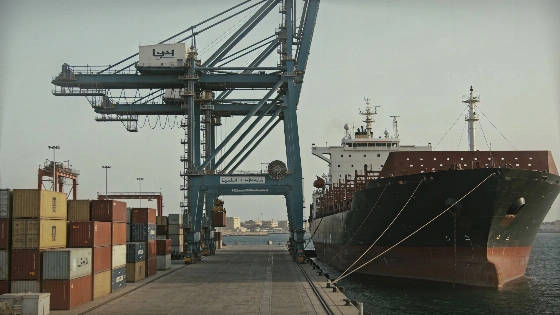
Participants discussed using the studies to direct investment toward promising sectors. They highlighted logistics and transport, as well as transit trade, an opportunity tied to Libya's location between African and European markets.
A related zone proposal in Aziziya also linked cleaner production with Libya's green-economy transition. The proposed integrated industrial zone is planned to cover approximately 1,200 hectares, equivalent to 12 million square metres. Ministerial discussions covered its executive report and implementation plan. They also addressed proposed renewable-energy integration and environmental measures, including water treatment and reuse, waste recycling, and environmentally friendly industries, Libya Herald reported.
The Aziziya proposal pairs cleaner production with industrial development. Its stated components include renewable energy and environmental measures such as water treatment and reuse, alongside recycling. Ministers have discussed the project, which remains a proposal.
Coordination remains central to implementation
Participants called on relevant institutions to coordinate, so the study findings can be translated into strategies and programmes and projects put into action. The government said the initiatives aim to diversify the productive base and improve national economic competitiveness, while supporting sustainable development.